JamzNG Latest News, Gist, Entertainment in Nigeria
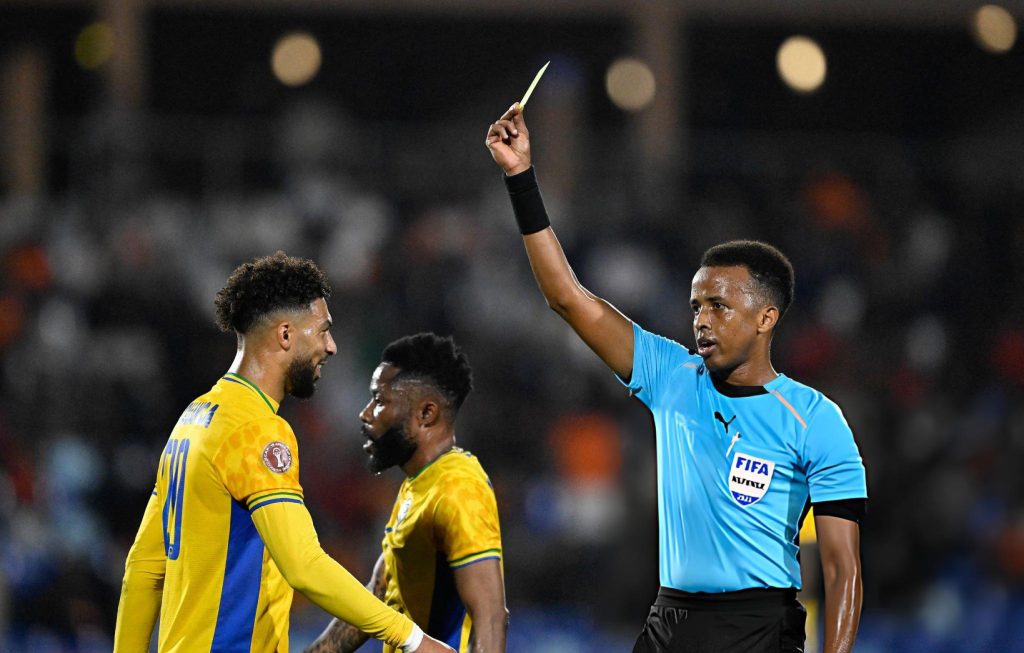
What should have been the highlight of Omar Abdulkadir Artan’s refereeing career and for Somalia has instead become one of the biggest controversies ahead of the 2026 FIFA World Cup.
The Somali referee, who would become the first Somali official to officiate at a FIFA World Cup, was denied entry into the United States despite having a valid visa and official FIFA accreditation.
Now, as questions mount over immigration policies, the role of FIFA and the treatment of international football officials, Artan has returned to Somalia to a hero’s welcome after his World Cup dream was abruptly shattered.
The controversy has drawn criticism, with many describing the situation as another example of the growing turmoil surrounding the tournament co-sponsored by the United States, Canada and Mexico.
US official reveals reason behind entry ban
A US official revealed late Tuesday that Artan was denied admission due to:
“association with alleged members of terrorist organizations.”
The official spoke anonymously because the matter is covered by visa privacy laws.
Earlier, Andrew Giuliani, executive director of the White House FIFA Task Force, had confirmed that Artan was denied entry for what he described as a very serious reason.
Speaking on Tuesday, Giuliani said Artan was denied entry because:
“very good reason”
but declined to provide further details at the time.
Artan had arrived at Miami International Airport on Saturday before being detained by U.S. Customs and Border Protection officials for what authorities described as “research concerns.”
The Somali Embassy in Kenya, which processed his visa application, confirmed that he had been issued a valid visa a few days before travelling.
11-hour airport interrogation
According to The New York Times, Artan submitted an intensive 11-hour interview at Miami International Airport.
The 34-year-old revealed that border officials questioned him at length about his travel plans, Somali politics and the activities of the al-Shabab militant group.
Artan reportedly presented FIFA documentation and evidence of his refereeing career, including photographs and official records, in an effort to verify his credentials.
Despite this, he was detained, placed in a holding cell and eventually taken on a flight back to Istanbul, from where he then traveled to his home in Somalia.
Speaking about the ordeal, Artan told the New York Times:
“I think they have a problem with my country.”
He added that he had all the required documentation and was never clearly informed why he had been denied entry.
The referee who made history in Africa
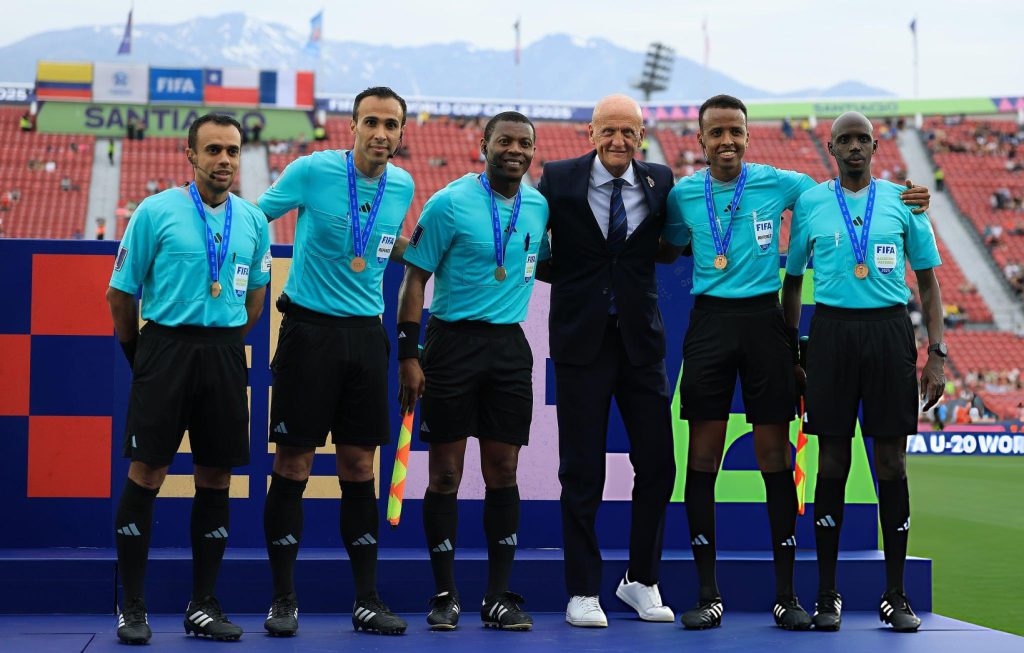
Artan’s exclusion is particularly significant because he had already made history before the tournament even began.
Named Africa’s Best Male Referee in 2025, he was included in the final list of FIFA referees for the World Cup two months ago.
His appointment meant that he would become the first Somali referee to officiate in football’s most important tournament.
The denial of entry to a FIFA-designated World Cup match official is an extraordinarily rare occurrence and has raised concerns about the ability of tournament staff from certain countries to participate in the competition.
FIFA later confirmed that it had no involvement in immigration decisions.
The governing body stated that it had been informed by US authorities that Artan:
“The status will not change at this time.”
Hero’s welcome in Mogadishu
While his dream of playing in the World Cup may have been dashed, Artan returned to Somalia as a national hero.
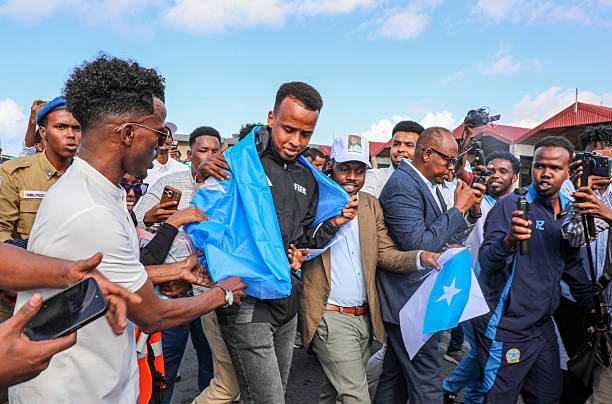
Hundreds of fans, government officials, football administrators and members of the public gathered at Mogadishu’s Aden Adde International Airport hours before his arrival.
When he stepped off the plane, his supporters, waving Somali flags, rushed to welcome him home.
In the emotional scenes Artan was seen draped in the Somali national flag before being escorted to the airport’s VIP terminal.
There he was received by the Minister of Youth and Sports of Somalia, officials of the Somali Football Federation and other dignitaries.
Addressing his followers, Artan promised that this setback would not define his career.
“I promise you, God willing, that I will attend the next one.”
He added:
“I want the Somali public to feel comfortable with this and maintain trust.”
In a separate interview with Al Jazeera, Artan expressed his gratitude for the support he had received.
“I want to thank FIFA for supporting me at all times, and also the Somali people.”
“That is why I am very grateful to FIFA and also to CAF.”
“This is what I have to say.”
The Somali Football Federation gathers behind the referee
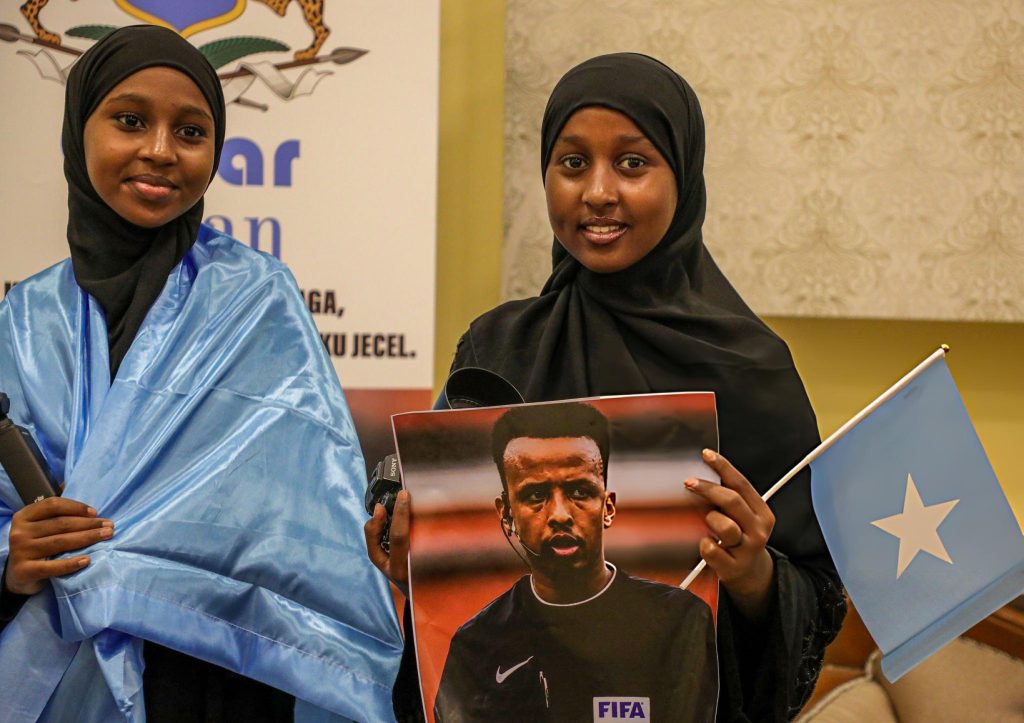
The president of the Somali Football Federation, Ali Abdi Mohamed, strongly defended Artan and criticized the situation that denied him the opportunity to fulfill a lifelong ambition.
Speaking in Mogadishu, Mohamed said:
“The denial has now affected Omar Artan, a referee who earned the right to officiate at the highest levels of world football and truly deserved the opportunity.”
Somalia’s Ministry of Youth and Sports also confirmed that diplomatic efforts were being made in an attempt to resolve the issue.
FIFA and CAF under pressure
The Confederation of African Football revealed that it had maintained close communication with Artan throughout the ordeal.
A CAF official told ESPN:
“Of course, we interacted with FIFA on the matter and FIFA is interacting with the host country.”
“He has also been speaking with our referee department throughout the entire situation.”
“I don’t know what more kind of support we can be.”
“What we are doing is quite diplomacy, we cannot negotiate in public when we do it.”
Meanwhile, FIFA has refused to publicly criticize US authorities and continues to insist that immigration matters fall outside its jurisdiction.
Growing concerns before kickoff
Artan’s case comes amid broader concerns surrounding US immigration policies ahead of the World Cup.
Somalia remains among nearly 40 nations affected by travel restrictions introduced under President Donald Trump’s administration.
Although Artan possessed a valid visa due to his official duties at FIFA, his case has intensified fears that fans, players, journalists and officials from certain countries may face similar obstacles.
The situation has become another flashpoint even before a ball is kicked in the expanded 48-team World Cup.
For Omar Artan, the dream of becoming Somalia’s first World Cup referee has been postponed rather than destroyed.
Judging by the extraordinary reception he received in Mogadishu, many in his homeland believe his story is far from over.