JamzNG Latest News, Gist, Entertainment in Nigeria
The federal government has begun clearing more than 300 containers of critical electrical equipment stuck in Nigerian ports, as part of efforts to remove a major bottleneck to the expansion and rehabilitation of the country’s transmission grid.
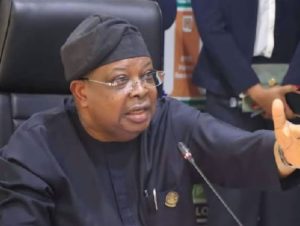
The Minister of Energy, Joseph Tegbe, disclosed this during a media briefing in Abuja to mark his first 100 days in office, saying equipment, including transformers, cables and other network components, will now be inspected, deployed and installed at designated project sites.
“The next task is to inspect, distribute and install the equipment,” Tegbe said, describing the release of the containers as part of efforts to dismantle administrative bottlenecks hampering the delivery of energy projects.
This development highlights one of the enduring contradictions of Nigeria’s electricity sector, where critical equipment purchased for projects remains stranded at ports while completed or partially completed projects await the components needed to put them into operation.
Tegbe said the federal government was working with relevant agencies to ensure the equipment was moved from the ports and put into use.
*912 MW unlocked in Lagos, Abuja
In a transmission-related development, the minister said newly commissioned transformers in Apapa, Ijora, Alausa and Lekki in Lagos have unlocked 672 megawatts of transmission capacity.
A 300 MVA transformer powered in Katampe, Abuja, added another 240 MW, bringing the additional transmission capacity reported in the two cities to 912 MW.
The interventions are part of the Ministry’s effort to strengthen transmission infrastructure around key demand centers and address bottlenecks that limit the amount of electricity supplied to distribution networks even when generation is available.
Tegbe said technical audits have begun along the Lagos and Abuja transmission corridors to identify weaknesses and direct investments towards interventions with a measurable impact on the system.
He identified the Lagos, Enugu-Port Harcourt and Abuja-Kaduna-Kano corridors as priorities for the next phase of network stabilization.
The minister said the immediate challenge is to ensure that infrastructure improvements result in more reliable electricity for consumers rather than remaining as isolated gains within the energy system.
He added that the ministry will publish performance scorecards in the next six months as part of efforts to make progress on the grid more transparent and easier to evaluate.