JamzNG Latest News, Gist, Entertainment in Nigeria
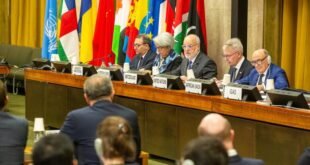
The UN-backed Investing in Child Well-Being World Summit opened on Wednesday, bringing together more than 600 participants from more than 100 countries.
A child’s well-being depends on many factors, including health, access to education, protection from violence, family support and access to help when they need it.
Progress is in danger
In the message to Summit, UN Secretary General Antonio Guterres emphasized that “when we invest in children, we invest in the future”.
The Secretary General’s message was read at the opening by Sabine Mahl, the UN Resident Coordinator in Uzbekistan.
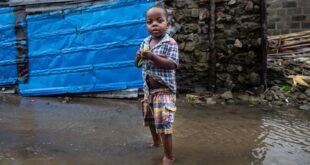
Guterres warned that progress in child welfare was under threat. Conflict, economic stress, health emergencies, poverty and climate change-related shocks put children at risk, especially those from vulnerable groups.
He also noted that humanitarian and development assistance is declining, while developing countries continue to carry large debt burdens, which is why the summit is not focusing on a single program or service, but on systems that need to work together.
Place children before the process
In his speech at the summit, Khalilur Rahman, President of the UN General Assembly, called for a sharper focus on turning commitments to children into tangible results, stating that “Goals are important when a child eats, learns, receives care, and returns home safely.” With only 36 percent of Sustainable Development Goals (SDGs) targets assessed as being on track or making moderate progress, he urged countries to accelerate collective action rather than scale back their ambitions.
He set four priorities: placing children before the process; build social services and protection according to their needs; reaching those most left behind; and matching political promises with funding, responsibilities, and deadlines. He also called for a child-centered approach to artificial intelligence and other technologies, saying digital transformation must expand opportunities while protecting children from exploitation, discrimination, manipulation and invasion of privacy.
The Chair of the Assembly argued that the government should assess progress not only by improving the average but also by closing the gap for children most at risk, including those living in poverty, with disabilities, on the move or affected by conflict and climate shocks. And he challenged governments to make their commitments visible in their budgets: “Statement of not being able to vaccinate children. A promise alone cannot pay a teacher. Applause alone cannot buy a cure for cancer.”
Exhibition of the Investing in Child Welfare World Summit event in Samarkand.
‘Serious warning’
The summit was organized by the Government of Uzbekistan in collaboration with the Office of the Special Representative of the UN Secretary General on Violence Against Children, a children’s rights body UNICEFWorld Health Organization (WHO) and the World Bank.
Ministers, academics and experts took part along with civil society and business representatives – as well as children and young people themselves.
Uzbekistan’s First Lady Ziroat Mirziyoyeva said that, according to experts, amid a sharp decline in international humanitarian aid, the number of deaths of children under five is expected to increase by 2025 for the first time in this century.
“This is a serious warning to all of usMirziyoyeva also noted that one billion children are growing up in countries most vulnerable to the impacts of climate change.
National priority
In Uzbekistan, where more than half of the population is under 30 years old, the welfare of children is a government priority. This agenda, actively supported by UN agencies, is also linked to changes in social services and access to early childhood education.
According to PBB Resident Coordinator Mahl, preschool enrollment in Uzbekistan has increased from 27 percent in 2017 to 78 percent in 2026.
More than 10,000 children with disabilities attend public schools and approximately 1.5 million families receive social assistance.
UNICEF says the number of children living in monetary poverty has fallen significantly, thanks in part to social support from the government.
In 2025, the country adopted legislation to protect children from all forms of violence, as well as an action strategy for 2026–2030.
Childhood cancer: addressing disparities
The Samarkand Summit also included the Second International Congress on Childhood Cancer – “From Healing to Well-Being” – dedicated to pediatric oncology and hematology.
According to WHO, more than 80 percent of children with cancer are cured in high-income countries, while the figure is below 30 percent in many low- and middle-income countries.
In his message, the UN Secretary General called this “an unacceptable disparities caused by underinvestment and weak social services.”
Cancer is diagnosed in approximately 400,000 children and adolescents worldwide each year. WHO aims to increase the global survival rate to 60 percent by 2030.
Children with cancer need more than just medical care. The state-sponsored institution Mehrli Maktab – which means “care school” in Uzbek – operates at the Scientific and Practical Medical Center for Pediatric Oncology, Hematology and Immunology in the capital Tashkent.
Children aged two to 18 can continue their education there during long-term treatment, studying mathematics, information technology, electronics, music and other subjects.
They make friends and discover new interests – many return after completing treatment to meet former classmates. Several former students also attended the meeting to share their experiences.
Organizers prioritize the voices of children and other young people. As Najat Maalla M’jidThe Special Representative of the UN Secretary General on Violence against Children, stated: “They have a voice, ideas, expertise, and urgency.”