JamzNG Latest News, Gist, Entertainment in Nigeria
Prof. Danladi of the University, praises Tinubu’s administrative reforms in the upstream oil and gas sector
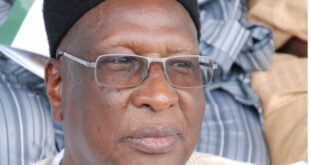
Lagos (Core Reporters) A university lecturer and energy governance scholar, Prof. Josiah Danladi, has praised President Bola Tinubu for what he described as a “bold and transformative recalibration” of Nigeria’s upstream oil and gas sector.
Speaking at the Citizens Connect conference in Lagos, Prof. Danladi said the President’s leadership has revived public confidence in the sector through reforms anchored on transparency, accountability and data-driven governance.
“For decades, the oil and gas sector has symbolized both our promise and our pain. We have heard stories of corruption, inefficiency and missed opportunities. Yet today there is a new story underway: a story of reform, renewal and restoration,” he said.
“Under the administration of President Bola Tinubu and through the diligent leadership of the Nigerian Upstream Petroleum Regulatory Commission (NUPRC) led by Engineer Gbenga Komolafe, the industry has been reborn on the solid foundations of the Petroleum Industry Act (PIA). What Nigerians are witnessing today is not luck; it is leadership: structured, deliberate and data.”
Prof. Danladi noted that the reforms are starting to produce tangible results across the value chain.
According to him, “In just two years, NUPRC has demonstrated what happens when political will meets professional excellence. The Commission has generated over ₦12.25 trillion in revenue for the federation in this short span of time – an unprecedented achievement that reflects the efficiency of the new monitoring systems and enforcement mechanisms.”
The university professor highlighted the far-reaching impact of eliminating fuel subsidies, which he said has freed up resources that are now being channeled into development priorities.
“The policy has led to a 200% increase in allocations to states and local governments, road projects, hospital projects, energy sector development, student loan programs and increase in NYSC allowances,” he said.
Expanding on the broader economic benefits, Prof. Danladi added that Nigeria is witnessing a gradual transition from being a net importer to a potential net exporter of refined petroleum products.
“Sleeper oil blocks are returning to productivity, production reports are now electronic and field development plans are rigorously monitored for compliance. The era of discretionary approvals and rent-seeking is fading, replaced by process, predictability and performance,” he said.
“Equally important is the focus on gas, the transition fuel for Nigeria’s economic future. Under the Gas Flare commercialization programme, investors are now turning environmental responsibility into an economic opportunity. We are reducing waste, protecting our planet and creating jobs.
“These are not abstract policy changes. They are the building blocks of a more transparent and sustainable energy future, and they are happening under President Tinubu’s watch.”
According to Prof. Danladi, reforms in the oil and gas sector are only significant if they result in better living conditions for citizens.
He said the Petroleum Industry Act (PIA) has reshaped not only the governance framework but also the relationship between government, companies and host communities.
“The Petroleum Industry Act has not just restructured institutions; it has redefined the relationships between government, industry and the communities that bear the brunt of extraction. Under Komolafe’s leadership, Host Community Development Trusts (HCDTs) have become the bridge between promise and delivery,” he said.
“More than £358 billion has so far been remitted to these funds, funding over 500 community projects in education, healthcare, road building and youth empowerment in oil-producing regions. For the first time, host communities are not treated as afterthoughts – they are partners. The principle is simple: those who live with the consequences of resource extraction must share in the benefits.
“This is what President Tinubu envisioned when he spoke of Renewed Hope. A hope that is not poetic but practical; a hope that builds hospitals, fuels schools and provides opportunities to long-forgotten communities.”
Professor Danladi said the renewed emphasis on transparency and accountability has restored investor confidence in Nigeria’s oil sector.
“Transparency has also become a hallmark of the new order. NUPRC’s electronic reporting platforms enable real-time production monitoring and cargo reporting, eliminating leaks that once drained our national resources. The days of guessing how much crude oil Nigeria produces are over. The data now speaks for itself,” he said.
“The Commission has also introduced robust systems to measure flue gas, monitor royalty payments and enforce environmental standards. This is governance at work: quiet, methodical, transformative.
“Rating agencies and international investors now describe Nigeria’s oil regulatory framework as more predictable and investor-friendly than at any time in the past decade. The reforms have positioned our country as an emerging energy investment hub on the continent.”
Prof. Danladi stressed that the gains of the last two years must be protected through continuity and concentration.
“These achievements did not emerge in a vacuum. They are the product of a reform-minded administration that has prioritized competence over complacency. But every reform is a journey, not an event, and journeys can be interrupted,” he stressed.
“The truth is that what we have gained over the past two years can easily be lost if the focus shifts from reform to rhetoric. Nigeria cannot afford to go backwards. We must protect this momentum by ensuring that the same political will that created these gains is renewed in 2027.”
He said Nigerians were increasingly satisfied with the performance of the NUPRC, describing it as one of the most effective and forward-thinking regulatory institutions under the Tinubu administration.