JamzNG Latest News, Gist, Entertainment in Nigeria
We cannot avoid the fact that in many countries around the world, populations are aging and fertility is declining.
The latest The State of the World Population report from the United Nations sexual and reproductive rights body (UNFPA) shows that around one in five adults worldwide believe they will not be able to have the number of children they want, largely due to economic insecurity, inequality and lack of support.
But Michael Herrmann, UNFPA economist and demographer, warned against panic. “Demographic change is not a crisis,” he said. “This is a reality that we need to understand, plan for and adapt to.”
Michael Herrmann, UNFPA advisor on economics and demography.
Demographic resilience
Herrmann, speaking on the sidelines of the Commission on Population and Development, which meets this week at UN Headquarters in New York, advocated a concept that is gaining traction: demographic resilience.
This means helping societies to anticipate population changes, adapt their institutions and make better use of human potential – an approach that can be applied in developing and rich countries, whether their populations are growing, shrinking or aging.
Some countries are experiencing a “demographic dividend” when growth in the working-age population drives economic growth.
Other countries, which are in the midst of a demographic transition, could benefit from a “second dividend” by investing in education, health, skills and technology to increase productivity.
Unfortunately, I reduced the number of workers
One of the most obvious impacts of an aging population is a shrinking workforce. Many countries have responded by raising the retirement age, a response that Herrmann says is often too blunt an instrument.
Requiring everyone to work longer is ignoring the differences in capacities, preferences and living circumstances of older people.
Some may want to keep working, even in part-time or less demanding jobs. Offering more flexible options can help older workers stay engaged while reducing pressure on the retirement system.
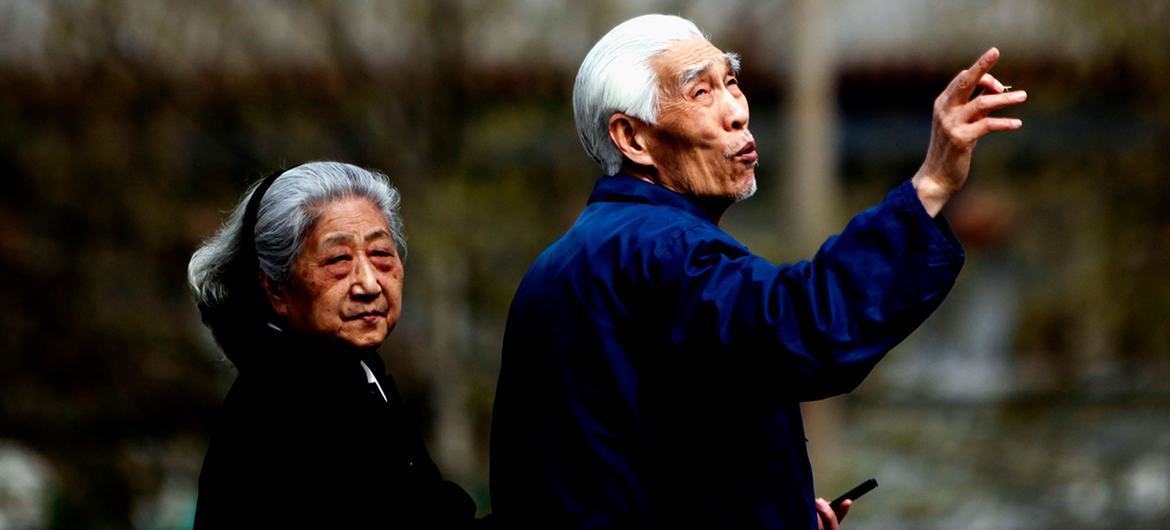
Population aging is the defining global trend of our time.
Cash for the kids?
When birth rates fall, some governments react by providing cash bonuses, tax breaks, or even official fertility targets. Evidence suggests that these measures had limited and short-lived impacts.
“A one-time payment doesn’t change a long-term decision,” Mr. Herrmann. At best, this may influence when people have children, not whether they have children.
UNFPA’s new Adolescent Reproductive Choices Survey, now being conducted in 70 countries, takes a different approach: asking people directly why they are having fewer children than they would like.
Preliminary results highlight combined economic and social pressures. The high costs of housing and childcare, job insecurity, and worries about the future – from political instability to climate change – all weigh heavily.
Likewise with gender role inequality, where women often bear most of the burden of care and unpaid household work.
“This is not a problem that can be solved with a check,” Herrmann said.
Right to choose
Policies driven by fears of population decline can also weaken rights, especially for women.
Fertility targets and top-down directives are sometimes accompanied by detrimental assumptions; for example, women must stay at home, sex education must be limited, or access to reproductive health services must be limited.
A rights-based approach starts from a different question: what prevents people from having the children they want?
From there, the government can identify practical solutions, such as affordable housing, accessible child care, parental leave, stable employment, and equal pay. Policies like these support families without coercion.
Getting old doesn’t mean declining
An aging population does pose real challenges, especially for pension and health systems. However, this does not automatically cause an economic downturn.
Spending on health and long-term care also creates jobs, particularly in services that originate in local communities. Meanwhile, seniors contribute in many ways beyond paid work, from caring for family members to volunteering.
The bigger challenge, according to Herrmann, is the smaller workforce. Addressing this requires inclusion – in other words, opening up more women, migrants, young people and older workers – alongside investment that increases productivity, such as education, skills, technology and infrastructure.
Migration is not a quick fix
Migration is another powerful – and often misunderstood – demographic force.
In countries experiencing sharp population declines, low birth rates are usually only part of the problem.
High emigration also plays a major role. In parts of the Western Balkans, the population has declined by 20 to 30 percent since the 1990s, largely due to people looking for work elsewhere.
In contrast, countries like Germany have managed to avoid population decline thanks to inward migration.
But migration is not a quick solution. Without language training, recognition of qualifications and employment pathways, many migrants are squeezed out of the labor market to the detriment of new arrivals and host communities.
Listen instead of panic
Ultimately, Mr. Herrmann’s view of demographic resilience is based on listening.
If most people want two children but there are fewer children, the answer is not to pressure the family or panic. The solution is to understand the existing reality and shape policies that expand choices, not limit them.
Get it right, he says, and demographic change will be something society can manage, with fairness, confidence and an eye for the long term.