 JamzNG Latest News, Gist, Entertainment in Nigeria
The Nigerian Corporation of Editors (NGE) has called on relevant authorities to re-examine the unsolved murder of renowned journalist Dele Giwa, insisting that the passage of 40 years must not extinguish the quest for justice.
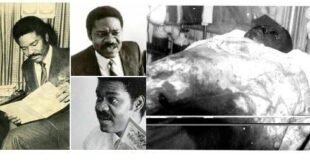
Giwa, co-founder of Newswatch magazine and one of Nigeria’s most influential journalists, was killed by a parcel bomb delivered to his home on October 19, 1986. Four decades after the incident, his killers have not been brought to justice.
In a statement released on Monday by its President, Eze Anaba and Secretary-General, Onuoha Ukeh, to mark the 40th anniversary of Giwa’s murder, the Guild described the unsolved murder as a painful test of Nigeria’s commitment to press freedom, public accountability and the rule of law.
The NGE said the country cannot afford to let the case disappear into history.
“Forty years is a long time to wait for justice. It is an inconceivable time for a nation that claims to uphold the rule of law,” he said.
The Guild urged the relevant authorities to examine credible evidence that may still be available, to preserve relevant documents and to pursue all legal avenues to establish the truth about Giwa’s death.
The professional media body, however, warned against trials by the media, stressing that it is not seeking the conviction of anyone without evidence, but calling for a credible investigation into a serious crime against a journalist and freedom of the press.
“We do not demand a media trial. We do not demand that anyone be convicted without evidence. We demand that a grave crime against a Nigerian citizen, a distinguished journalist and freedom of the press not remain an enduring symbol of impunity,” the Guild said.
The NGE described Giwa as a journalist of unusual audacity, intellectual rigor and literary elegance, whose work demonstrated that Nigerian journalism could be courageous in questioning power while maintaining high standards of professional excellence.
According to the Guild, Giwa understood that journalism was neither a public relations department for those in authority nor a tool to flatter the powerful, but a public trust.
It says the murder of the late journalist was not simply the killing of an individual but an attack on the freedom to ask questions, report wrongdoing and hold authorities accountable.
The NGE also expressed concern about the implications of the unsolved murder for journalists investigating corruption, abuses of power or reporting the activities of influential interests.
The failure to bring perpetrators to justice sent a worrying message to media practitioners and underlined the need for greater protection of journalists and effective investigations whenever crimes are committed against them.
The NGE commended NEWSWATCH Plus Limited and its boss, Ray Ekpu, the only surviving member of the original Newswatch quartet, for preserving Giwa’s legacy through publication.
He said the publication would ensure that Giwa’s voice and contribution to journalism continues to inspire generations of media professionals.
As well as remembering Giwa, the Guild challenged contemporary journalists and editors to reflect on the state of the profession, particularly its independence from political and commercial interests.
The NGE said the pursuit of justice for Giwa requires more than provocative headlines or dramatic public appearances, but requires verification, courage, independence, fairness and commitment to the truth.
“Courage without precision can become recklessness; independence without ethics can become irresponsibility,” the Guild said, adding that journalism worth defending must be both fearless and scrupulous, independent and responsible.
The NGE urged publishers to protect the integrity of newsrooms, publishers to resist intimidation, and journalists to uphold professional discipline, especially in a context of growing misinformation, political propaganda, economic pressures and the use of social media as a weapon.
He also called on public authorities to tolerate controls and security agencies to protect media workers from threats and attacks, stressing that press freedom requires more than constitutional guarantees, insisting that it must be supported by responsible journalism, independent media institutions and effective enforcement of laws.
The Guild also warned against reducing Giwa’s memory to annual commemorations without concrete efforts to address the circumstances of his death.
“Memory without action risks becoming an elaborate way of accommodating injustice,” the Guild said.
The elite media group has called for Giwa’s professional ideals to be taught in journalism schools, discussed in newsrooms and preserved in the national historical record, urging younger journalists to appreciate the sacrifices made by previous generations in defending press freedom.
Defending press freedom is not the exclusive responsibility of journalists, but a public cause, because attacks against journalists also threaten citizens’ right to reliable information.
The Guild urged successive governments to recognize that the responsibility to investigate serious crimes has not waned with the passage of time or changes in political leadership.
Giwa’s legacy should serve both as a monument to professional courage and as a reminder that crimes against journalists must not become permanent symbols of impunity.
According to the Guild, “a parcel bomb may have ended Dele Giwa’s life, but it failed to extinguish the ideals he stood for.
“Dele Giwa is no more, but the questions his murder left behind remain alive. The man has been silenced; the search for justice must not be.”
Post views:
89