JamzNG Latest News, Gist, Entertainment in Nigeria
The conference of the political parties of Nigeria (CNPP) and the coalition of the organizations of the National Civil Society (CNCSOS) have condemned the Federal Government Plan to contract a new loan of 1.75 billion dollars from the World Bank, describing it as reckless, insensitive and a betrayal of the Nigerian people.
The two groups, which represent the parties concerned political and over seventy -five civil society organizations at national level, have expressed shocks for the fact that the administration of President Ahmed Tinubu is looking for additional loans despite what they have described as “unprecedented revenue collections in the last eight months”.
They warned that the plan “not only undermines the credibility of the government, but also immersed the ordinary Nigerians in a deeper suffering while he was eroded all hope for a sustainable economic recovery”.
According to the declaration jointly signed by his partner James Ezema, the deputy secretary of the national advertising of the CNPP and Alhaji Ali Abacha, national secretary of the CNCSOS, the new loan move exposes “the duplicity that now characterizes the tax direction of this administration”.
The groups stressed that “only a few days ago, the president was told to the Nigerians that the revenue objectives for 2025 had already been exceeded before expected and that the country would no longer have relying on the loan to finance its budget”.
Citing the official data, the declaration recalled that “the performance of the revenue between January and August 2025 stood at N20.59 trilioni, which represent an impressive increase of 40.5 percent compared to the same period of 2024. It boasts of excess revenue afflusted?”
The CNPP and CNCSO have argued that “Nigeria does not have a problem of generation of revenue but a problem of looting, diversion and bad management”.
They accused the public officials of having hungry with cronies and contractors to subtract the Commonwealth in private bank accounts, insisting on the fact that “what the administration should do is recover these steal funds and bring them back to the Federation account”.
They therefore asked the President Tinubu “to urgently constitute a high -power presidential jury with the clear mandate to trace, audit and recover sacked public funds”. The groups stressed that such a panel must “examine all the loans guaranteed by past administrations, investigate how they were distributed, expose the channels of undue appropriation and force recovery in the public treasure”. Whatever short of this, they said, “it would be equivalent to political deception and the betrayal of the masses that are already suffocating under policies that have undressed them of their means of subsistence”.
By painting a gloomy image of life in today’s Nigeria, the organizations have said that “from the hasty and unwanted removal of the subsidy for the fuel two years ago, the masses were crushed by the fuel costs to the stars that become impressed through every aspect of life from the prices of food to transport”. They complained that “electric rates have increased astronomically even if the power supply remains epileptic, while citizens are forced to buy prepaid counters at exorbitant costs even if these meters technically belong to the distribution companies and not to buyers”.
They criticized new taxes and withdrawals such as “the five percent oil tax that will make a Nigerian barber or a hairdresser who buys n5,000 fuel to feed their generators due to the lack of electricity to pay the N500 taxes and the punitive charging N50 on each transfer N10.000”. According to them, these charges “weigh heavily to the poor Nigerians who fight to make ends meet” in a country already devastated by unemployment and undertaking.
The groups said that the consequences of these economic realities are evident in the increase in the number of sudden deaths “while the Nigerians collapse daily under the weight of untreated diseases, hypertension, hunger and despair”. The families, they warned, “are disintegrating under economic pressure, while young people turn more and more financial crimes as desperate means of survival”. They added that the worsening of the “Japa syndrome” continues to drain the country of qualified professionals, a development that have blamed exactly “policies that make life unbearable for laborious citizens, rewarding corruption and waste on top”.
On the morality of the new loan, the groups have said: “It is morally wrong for leaders who live in luxury, travel to private jets and enjoy sumptuous allowances to continue slave people with loans whose benefits never reach ordinary citizens”. They underlined that “debt maintenance is already consuming most of the Nigeria revenues, leaving very little for capital investments” and have argued that each new loan “does not translate into jobs, infrastructures or better living standards for the masses, but rather feed a cycle of waste, diversion and reimbursement bonds that further circumvent the economy”.
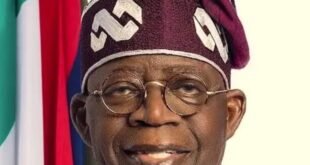
The president Tinubu warned that “the path that his administration is passing through is unsustainable and dangerous”, warning that “the patience of the masses will eventually be exhausted and history has shown that no government survives once people lose fear and decide to take their destiny in their own hands”.
Returning their request for a change of management, CNPP and CNCSOS insisted that “the solution to the tax challenges of Nigeria is not to borrow indefinitely but to face front corruption, recover stolen funds, cut expensive expenses and honestly invest in the sectors that generate jobs and growth.”
The declaration ended with a severe warning: “Nigeria cannot continue to borrow to finance corruption. The resources to reconstruct this country exist within its borders and in the bank accounts of those who have stolen them. Until these resources are not recovered and justice is not done, no new loans should be contemplated, that it is approved.”
Post views:
119