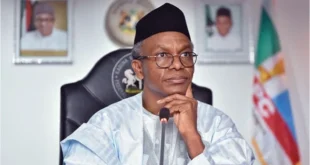
Governor Makinde says High Court ruling on regional autonomy diverts attention from real issues

Governor Seyi Makinde of Oyo State has acknowledged the importance of the recent Supreme Court ruling on local government autonomy, but said the ruling did not address the real problems in the state.

According to him, the decision was only a diversion of the issue, because the issue of regional autonomy was only one part of a larger puzzle.

The landmark decision empowers local governments with greater financial independence, a move widely seen as a step towards strengthening grassroots development. However, in a statement released on Saturday, Governor Makinde argued that a more comprehensive approach was needed to address Nigeria’s challenges.

READ ALSO: ‘Leaders will now provide services without excuses,’ Tinubu hails Supreme Court ruling on electoral autonomy

Makinde reportedly identified issues such as insecurity, corruption and lack of economic diversification as key areas requiring urgent attention. He called for national talks focused on developing a cohesive strategy to address these challenges.

He said in part, “So the Supreme Court ruling, there’s local government autonomy, financial autonomy, and all that, and I’ll keep saying it, I think it’s just a distraction. We have to deal with the real problems that we have.

“The problem we face is that we are not producing enough. We are not productive,” he said.

He also stressed that after all is said and done, the problems of hunger and hardship in the country still exist.

Governor Makinde says S’Court ruling on LG autonomy is a distraction from real issues first appeared on Latest Nigeria News | Headlines from Ripples Nigeria.

Check Also

Freedom of Information Act and The Limits of Press Freedom, By Mack Ogbamosa – THISAGE

        Introduction  A free, independent, and vibrant press is one of the strongest pillars of any democratic society. It is against this background that most democratic countries  make constitutional provisions for a free press . Others even go further to enact specific laws to make affairs of governments freely available to the public. Currently, there are more than  130 countries in the world that have free press laws. They include Sweden, United States, France, South Africa and Nigeria. Nigeria did not only make  constitutional provisions in Sections 22 and 39(1) of the 1999 Constitution ( as amended) but also went ahead to enact the Freedom of Information Act  in 2011. Section 22 of the 1999  Constitution states: “ “The press, radio, television and other agencies of the mass media  shall at all times be free to uphold the fundamental objectives contained in this chapter( ie Chapter II) and uphold the responsibility and accountability of the Government to the people”  Section 39(1)  of same Constitution states : “Every person shall be entitled to freedom of expression, including freedom to hold opinions and to receive and impart ideas and information without interference” ..  To complement these constitutional provisions, Section 1 (1) of the Freedom of Information Act (FOIA) states “Notwithstanding anything contained in any other Act, law or regulation, the right of any person to access or request information, whether or not contained in any written form, which is in the custody or possession of any public official, agency or institution howsoever described, is established.” while Section  2(2), states that: “A public institution shall ensure the proper organization and maintenance of all information in its custody in a manner that facilitates public access to such information”  Primary Purpose of FOIA  According to the Act, its primary purpose is to make information about public records freely available to every Nigerian in the public interest. …

Leave a Reply

Your email address will not be published. Required fields are marked *