JamzNG Latest News, Gist, Entertainment in Nigeria
By Ayo Kehinde
The Joint Health Sector Trade Unions (JOHESU) have threatened to take fresh industrial action over the Federal Government’s failure to implement the long-awaited Adjustment of the Consolidated Health Salary Structure (CONHESS), a development that could trigger another disruption in the Nigerian healthcare sector.
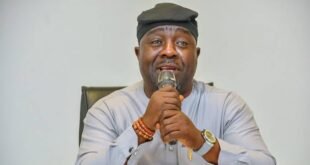
The warning was made by JOHESU National President and President of the Medical and Health Workers Union of Nigeria (MHWUN), Kabiru Minjibir, during an interview with journalists on the sidelines of the 114th International Labor Conference (ILC) in Geneva, Switzerland.
Minjibir expressed frustration with what he described as the government’s continued delay in addressing pay disparities affecting health workers, stressing that the issue has remained unresolved for more than a decade despite repeated engagements and negotiations.
According to him, the controversy arose from a provision incorporated into the salary structures introduced in 2016 for doctors and other healthcare workers.
He explained that the agreement stipulates that any upward revision of one salary structure would automatically require a corresponding adjustment of the other.
“When the two salary structures were released in 2016, there was a clause that once one salary structure was revised upwards, it automatically attracted the revision of the other,” Minjibir said.
He noted that while the Consolidated Medical Salary Structure (CONMESS), which applies to doctors, has undergone three separate reviews, workers in the Consolidated Healthcare Salary Structure (CONHESS) have not yet received a corresponding adjustment.
“Unfortunately, three revisions were made to CONMESS, which is reserved for doctors, while other health workers were neglected. This has been a source of agitation for the last 10 years and the issue remains unresolved to this day,” he said.
Minjibir recalled that persistent disagreement had previously led JOHESU to take industrial action last year, resulting in an 84-day strike that significantly disrupted operations in federal healthcare institutions nationwide.
He said the strike ended after the union entered into negotiations with the federal government through the intervention of the Ministry of Labor and Employment and other relevant agencies, including the National Salaries, Incomes and Remunerations Commission.
“When we gave an ultimatum to the federal government last year, there was an 84-day strike that affected federal health institutions across the country. Following that action, we were invited to a meeting by the Minister of Labor and Employment along with relevant ministries and agencies,” he said.
According to him, both sides subsequently signed a Memorandum of Understanding (MoU), under which the government committed to implementing the wage adjustment by the end of April 2026. However, he said that the agreement was not respected.
“It may interest you to know that so far the issue has not been addressed. There is already agitation among health workers across the country that another ultimatum should be issued to the government,” Minjibir said.
Despite growing pressure from members, he revealed that JOHESU leadership is still consulting with stakeholders before reaching a final decision on industrial action.
He urged the federal government, particularly the Minister of Labor and Employment and the Coordinating Minister of Health and Social Security, to speed up negotiations and address the issue before tensions rise.
“The same adjustment should be extended to other healthcare workers in the interest of justice and equity,” he said.
Minjibir also warned that failure to improve the pay of health workers could have wider implications on the delivery and productivity of health services.
“If healthcare workers’ pay is not improved, the government should not expect productivity. We hope that the government addresses this issue before we get to the point of another ultimatum or another industrial action, because patients are always the recipients whenever healthcare workers go on strike,” he said.
Minjibir also rejected claims that non-physician healthcare workers simply seek to take advantage of profits made by doctors, describing such claims as misleading.
“This is not true because there is job specification in the healthcare sector and every professional should be paid according to his responsibilities. We are not competing with anyone. Doctors are our partners in providing healthcare services in the country,” he said.
Minjibir stressed that healthcare delivery depends on cooperation between different categories of professionals, insisting that JOHESU’s demands are based on equity rather than rivalry.
“Health service is a team effort. No one can do their job alone. Our agitation is not based on what others have achieved, but on the principle of justice and fairness for all health workers,” he said.