JamzNG Latest News, Gist, Entertainment in Nigeria
For twenty-five years, NOG Energy Week has been one of the rooms where Nigeria tells the truth about energy: what we promised, what we deferred, what we delivered and what we must become now.
This year’s theme is about ambition, competitiveness and resilience. I want to add a fourth word: try.
Because in this season – when records are tested, reforms are debated and the future of our economy is questioned – Nigeria does not need stronger promises. Nigeria needs proof that courage works. Proof that discipline works. Proof that when government does what it says, capital responds, production increases and national confidence returns.
Let’s start with the world as it is, not as we would like it to be.
The global energy map has changed. Capital is no longer sentimental. He doesn’t let himself be moved by speeches, slogans or sympathy. The capital has no passport. It’s rational. Price the risk. Credibility follows. A question arises: can this country transform resources into bankable projects and bankable projects into reliable returns?
For Africa, this question is urgent. And for Nigeria, the scale of the task is equally clear: to sustain the current base and grow towards our 2030 production target, the analysis shows a financing gap of approximately $38.3 billion. This gap cannot be filled by rhetoric, and it cannot be filled by Nigeria alone. And that capital – from Lagos, Johannesburg, London, Houston, Abu Dhabi or Beijing – demands the same thing: credible rules, bankable projects, competitive costs, predictable regulation and disciplined execution. This is a warning – and an opportunity.
So the competition is no longer just geology against geology. It’s government against government. It’s rules against rules. It’s delivery versus delay.
And Nigeria made a choice.
We have chosen not to be a warehouse of raw potential. We have chosen to become a driver of African industrialization. We have chosen not simply to produce molecules, but to convert molecules into megawatts, fertilizers, petrochemicals, mobility, manufacturing, jobs and exports.
This is the real energy transition for Africa. Not transition as surrender. Transition as transformation.
Under the leadership of President Bola Ahmed Tinubu, this administration has done what many have called too difficult, too risky, too controversial or too politically costly. We began to remove the distortions that punished production and rewarded losses. We have undertaken reforms that had been discussed for years and delayed for decades.
We have recalibrated tax terms, clarified regulation and simplified oversight. We have introduced targeted incentives and reduced contractual times by more than half. And we made a clear statement to the world: Nigeria no longer asks to be trusted; Nigeria is working to be bankable.
The results are not abstract.
Our goal is three million barrels per day and ten billion standard cubic feet of gas per day by the end of the decade. We now have more than $50 billion in upstream projects in the pipeline. Over the past three years, more than $10 billion in long-awaited final investment decisions have arrived.
Crude oil and condensate production has increased by about 400,000 barrels per day since 2023. Onshore production is at its highest level in two decades. Nigeria’s share of Africa’s upstream FIDs has increased significantly from fringe to leadership. External reserves have exceeded $50 billion. These are not discussion points. They are signals. When the rules improve, capital moves.
And we’re not just fixing oil and gas. We’re resetting the power.
For too long, the electricity market has borne the brunt of unpaid obligations, missed incentives and weak confidence. This is why the presidential power sector financial reform program is not simply a bond issue; it is a £4 trillion credibility programme. This is a negotiated restoration of pre-existing obligations, payment discipline and market confidence throughout the generation, gas and financing chain.
He tells GenCos: produce with confidence. He tells gas suppliers: supply with confidence. It tells financiers and investors: Nigeria is rebuilding the bankability of the energy value chain. And he tells Nigerians: the goal is not accounting elegance in Abuja; it is more reliable energy for factories, SMEs, agro-processing, mining and homes.
And since energy is only as vital as the fuel that powers it, the gas must go from aspiration to execution. Gas is not a slogan. Gas is Nigeria’s industrial backbone: the fuel for power, the feedstock for fertilizers and petrochemicals, the bridge to CNG mobility, LNG exports, regional integration and cleaner cookstoves.
But we must be honest: the reforms have been hard on families, and the recent increase in cooking gas prices was a warning that domestic supply, logistics, affordability and market discipline must go hand in hand. A gas-rich nation cannot feel comfortable when families are forced to pay for firewood, coal or kerosene. That’s why we are acting on both supply and affordability. We are increasing domestic LPG supply, rebuilding the import reserve where needed, strengthening market surveillance and moving towards transparent pricing parameters so that consumers, regulators and investors can see the market more clearly. The VAT Amendment Ordinance 2024 zeroes the rate on LPG and exempts conversion equipment and chain, including cylinders, valves, regulators, conversion kits and installation services, from VAT.
Since January 2024, our office has supported approximately $92.6 million worth of import duty exemption certificates for LPG infrastructure, including approximately $30.4 million this year alone. These incentives are not isolated measures; align with the Decade of Gas, NNPC’s gas strategy and the Presidential CNG Initiative. Together, they point in one direction: a Nigeria where gas powers industry, electricity becomes more reliable, cooking becomes cleaner and more convenient, and reform finally manifests itself in the daily lives of the Nigerian family. And let’s be very clear about Africa.
Africa doesn’t need pity. Africa needs scale. The Dangote refinery, with an output of 650,000 barrels per day, is proof that Africa’s industrial scale is not ambitious; it is operational. Local gas participation increased from 69% to 83%. Companies like Seplat, Oando and Renaissance are not simply local players; they are continental energy players. This is the property. This is ability. This is the future taking institutional shape.
But ownership must be accompanied by discipline. Local content must create value, not inflation. Regulation must accelerate, not hinder. Politics must invite capital, not scare it. Every unnecessary delay is an export subsidy to another country. Every unclear endorsement is a tax on national ambition. Every project we fail to deliver becomes someone else’s refinery, someone else’s power plant, someone else’s job.
This is why reform is never neutral. The reform changes the incentives. Change habits. It changes the balance between those who have benefited from complexity and those who deserve efficiency.
So yes, reform will always meet resistance. Some of this resistance is sincere; change can be disruptive and responsible leadership must listen. But part of it also comes from the comfort of old agreements, from systems that worked well for a few, but not well enough for the country.
When we reduce approval times, we are not attacking anyone; we are defending national competitiveness. When we eliminate revenue losses, we are not settling accounts; we are protecting the Nigerian people. When we insist on transparency, discipline and results, we are not impatient; we are recognizing that Nigeria has already waited too long.
And in times of change, people will always find the language to question the messenger. Too new. Too direct. Too ambitious. Too unconventional. But leadership is not validated by comfort. It is validated by results.
We welcome your inspection. We welcome the debate. We welcome honest criticism. But we will not apologize for reform systems that need to work better for Nigerians, for investors and for the next generation. And I say “we” deliberately.
This record belongs to a team: the President who gave the direction; state governments, ministers, regulators, our national oil company, government agencies, operators, investors, public servants and workers across the value chain. It also belongs to Nigerians, who have borne the brunt of the reforms and have every right to demand that the reforms now deliver relief, jobs and dignity.
We haven’t finished the job. No serious reformer says the job is done. Inflation, affordability, security, measurement, infrastructure and execution still require urgency. But no one confuses unfinished work with failed work. Nations move when people decide that temporary discomfort is better than permanent decline.
This is campaign season. So, let’s examine the minutes. Let the questions be asked. Let the debate be vigorous. But let’s be honest.
Ask yourself whether Nigeria is more credible today than yesterday. Ask if the investment is returning. Ask if production is increasing. Wondering whether energy sector debt will finally be addressed. Ask yourself if gas is treated as industrial infrastructure and not just as an export commodity. Asking whether old excuses are still strong enough to defeat a new national ambition.
My answer is clear.
The era of Nigerian hesitation is coming to an end. The era of Nigerian ambition has begun. Our task now is to turn reforms into aid, capital into projects, projects into jobs and energy into national greatness.
History will not ask us if we inherited oil, gas, sun, rivers and talent. History will ask us if we have converted them into prosperity. If we left behind us pipelines instead of promises. Power plants instead of press releases. Institutions instead of personalities. Jobs instead of slogans. Trust instead of cynicism.
The first twenty-five years of NOG helped build consensus. The next twenty-five will have to build the delivery.
Let’s say that when the world changed, Nigeria did not shrink. Let’s say that when capital asked for credibility, Nigeria built it. Let’s say that when the establishment defended delay, a new generation chose execution. Let’s say we stopped celebrating potential and started delivering performance.
This is the job. This is the record. This is the legacy.
-Verheijen,
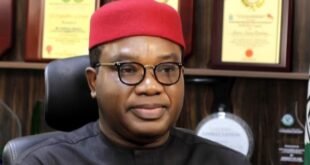
The Special Adviser to the President on Oil and Gas delivered this speech at the NOG Energy Week in Abuja
Post views:
141