JamzNG Latest News, Gist, Entertainment in Nigeria
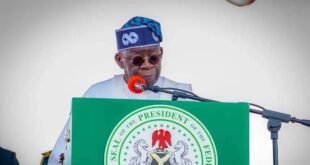
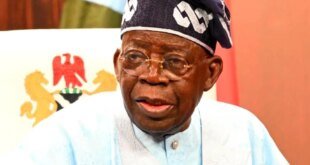
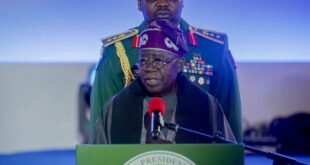
President Bola Tinubu on Thursday stated that Nigeria has gone through a painful reform process, and prosperity will follow for the country and its citizens.
Tinubu made the declaration in his Independence Day message to mark his country’s 66th birthday, titled “From Reform to Prosperity”, in which he defended his government’s economic policies and urged Nigerians to continue doing the same.
He said, “The era of reform has been successful. Now the era of prosperity has begun,” he said.
Tinubu urged Nigerians to look forward rather than reconsider the sacrifices associated with reform, stating that the country had “passed through our own Red Sea”.
“Our goal is in sight. Our foundation is strong. Our direction is clear. So, let’s move forward. Don’t look back,” added Tinubu.
He declared that Nigeria had reached a “turning point”, and said that the difficult phase of economic reform was over and that the country had entered a new “age of prosperity” focused on reducing the cost of living, creating jobs and ensuring that the benefits of economic growth were shared widely.
Tinubu said reforms undertaken since he took office have improved the course of the country’s economy, describing them as a painful but necessary solution to long-standing structural problems.
Using the analogy of a cancer patient, the President said Nigeria had been dealing with the symptoms of its economic problems for too long rather than addressing the underlying causes.
“In 2023, poverty is increasing, and hope is almost lost. The country’s situation is bleaker than ever. We have no choice but to act,” he said.
Tinubu said previous governments had chosen “morphine” by maintaining inefficient arrangements and postponing difficult decisions, while his government chose to “eliminate cancer”.
READ ALSO: 2027: SDP Presidential Candidate, Adebayo, in Independence Day speech warns INEC
He acknowledged that the reforms had produced painful “side effects,” but argued that those difficulties should not be confused with the underlying economic problems the reforms sought to address.
“The reforms we implemented did not create weaknesses in our economy. They instead addressed those weaknesses,” he said, warning against efforts to reverse those policies and return to what he described as “addictive subsidy abuse.”
According to him, three and a half years into his administration, economic indicators show that reforms are bearing fruit.
He said the economy had grown more than four percent this year, with both oil and non-oil sectors contributing to a period of steady growth.
Tinubu also cited reduced oil theft, a significant reduction in inflation from its peak, increased foreign exchange reserves and a more stable foreign exchange market as evidence of progress.
He said Nigeria recorded its highest non-oil export earnings in 2025, exceeding $6 billion.
“This is not an empty claim. International observers, journalists, NGOs and multilateral institutions can see this change,” he said, adding that foreign direct investment (FDI) continues to increase.
Tinubu said his government’s focus has now shifted from improving the country’s economic trajectory to realizing “shared and widespread prosperity”.
He said prosperity does not only mean economic growth and improving statistics, but also a country where farmers can produce more cheaply and earn decent profits, factories have reliable electricity, businesses can access credit, and young people can find productive work.
He identified reducing the cost of living as a key priority of the new phase, and said that the government would seek to achieve this by lowering the costs of producing and transporting goods.
He acknowledged that millions of Nigerians continue to struggle with the costs of food, education, healthcare and transportation.
He attributed the difficulties to decades of low productivity, inadequate infrastructure, inadequate opportunities and weak institutions, and said the problems predated his administration’s reforms.
“We cannot erase in four years what has accumulated over generations. But we can change its direction. We can build an economy that continues to lift people out of poverty while ensuring that those who are still vulnerable are not left behind,” he said.
“Our goal is not to eradicate poverty more efficiently. We will defeat it,” stressed the President.
He recognizes that achieving this goal requires time, discipline, sustainable economic growth, and the creation of millions of productive opportunities.
He stressed that Nigeria was entering the new phase from a stronger position because, in his assessment, the fundamental direction of the economy had improved.