JamzNG Latest News, Gist, Entertainment in Nigeria
President Bola Tinubu’s reform agenda is a bold program that has influenced Nigeria’s institutional and economic structures over the past three years. Some of the decisions the administration made were difficult but necessary, especially to address structural weaknesses that successive governments had avoided or simply postponed.
The problem, however, is that a good idea can seem bad if poorly implemented. Although the reforms have produced some significant macroeconomic benefits and presumably pulled the country out of the abyss it was heading towards, there are still large gaps that the government will need to fill in the future.
It is unrealistic to expect painless therapeutic solutions to Nigeria’s long-standing economic problems. There would always be a price to pay to correct decades of distortions, subsidies, fiscal indiscipline and weak institutions. But when the medicine begins to hurt the patient more than the disease, the doctor must review the treatment.
This is where the Tinubu administration needs to demonstrate greater urgency.
The weakness of the reform program is not necessarily that the government pursues the wrong objectives. The fact is that economic growth and macroeconomic indicators appear to have received more attention than the well-being of the people who should benefit from that growth.
There is a growing obsession with economic growth numbers without corresponding pragmatic initiatives to mitigate the immediate impact of reforms on the Nigerian population. Inflation may eventually moderate, foreign exchange markets may stabilize, and government revenues may improve, but these outcomes will mean little to a family that can no longer afford food, transportation, housing, or basic healthcare.
Growth must therefore be measured not only by what happens to government statistics, but also by what happens to the purchasing power, dignity and economic opportunities of the average Nigerian.
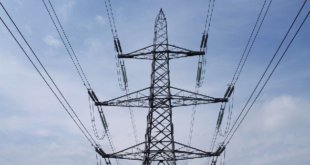
The power problem is another glaring weakness. Nigeria cannot build a competitive economy on unreliable electricity. For decades, companies have been forced to generate a significant portion of their own energy, passing costs directly to consumers through higher prices. The consequences are obvious. Production becomes more expensive, businesses become less competitive, and inflationary pressures persist.
The government needs a clear and credible short, medium and long-term plan to solve the electricity problem. Nigerians need to know what can realistically be achieved within two, five and ten years. The country cannot continue to treat electricity as an emergency permanently awaiting another emergency solution.
Throwing money at deeply rooted problems is no substitute for structural solutions. Symbolic interventions can provide temporary relief, but they cannot permanently resolve poverty, the looting of public assets, vandalism, youth frustration, or the growing discontent resulting from the fallout of reforms.
Nigeria needs interventions that address the causes of these problems. Young people need meaningful economic opportunities, not one-off palliatives. Public assets need protection and responsibility, not repeated reconstruction after acts of vandalism. Poor communities need functioning institutions and productive opportunities rather than periodic subsidies.
There is also the troubling issue of the ever-expanding cost of government. At a time when citizens are being asked to make sacrifices, the government must also give the impression that it is making sacrifices. Expanding the machinery of government simply to create positions for political allies sends the wrong message.
The answer is not simply to create more agencies, appointments and bureaucratic structures. It is about pursuing bold measures that reduce official corruption, eliminate leaks in public finances and ensure that available resources are used where they can have the greatest economic and social impact.
A government that asks citizens to endure painful reforms must demonstrate that it is equally prepared to reform itself.
Then there is the issue of security, which cannot be separated from the broader social and economic crisis. Nigeria’s insecurity is not just a military problem. It is deeply connected to illiteracy, unemployment, social dysfunction, the weakness of basic governance structures and religious bigotry, particularly in parts of the North.
Military operations can temporarily suppress violence, but they cannot alone eliminate the conditions that continually produce new recruits for criminal and extremist networks. A serious security strategy must therefore combine military action with education, employment, effective local governance and social intervention.
The administration must begin to see these problems as interconnected rather than isolated challenges. Poverty fuels frustration. Frustration fuels crime. Poor electricity increases the cost of production. High production costs fuel inflation. Inflation worsens poverty. Weak institutions allow corruption and the looting of public assets to continue. And insecurity further discourages investment and economic activity.
This is the cycle that needs to be broken.
President Tinubu has taken some difficult steps in his bid to reposition the Nigerian economy. The next phase, however, cannot be driven by reform as an end in itself. It must be guided by the question of how such reforms can translate into a better, safer and more productive life for Nigerians.
And this is where the real work begins…
*Ladi Ayodeji, Marriage Counselor, Author, Media Expert and Philosopher, can be contacted on 09059243004, WhatsApp only.