JamzNG Latest News, Gist, Entertainment in Nigeria
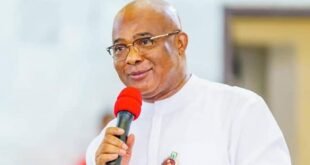
Former Governor of Ekiti State, Dr Kayode Fayemi, has said that although Christians may belong to different political parties and espouse different political strategies, the church should not be an electoral machine for any political party.
Fayemi spoke on Saturday while addressing the plenary session of the Nigerian Catholic Bishops’ Conference in Osogbo, Osun State, on the theme, “Faith in Action: Empowering the Catholic Laity for Active Political Participation Ahead of the 2027 General Elections.”
Speaking about the role of Catholics in politics, Fayemi said it was not to impose a Christian theocracy but to change society by putting their faith into action, rather than submitting to blind loyalties based on ethnicity or religion.
Fayemi said, “The role of Catholics in politics is not to impose a Christian theocracy. Religious conversion through coercion is not part of our political engagement. The 2002 Doctrinal Note recognized the legitimate autonomy of the political sphere and made clear that the church does not prescribe one specific political solution to every worldly question.
“This implies that Catholics may legitimately belong to different political parties and support different political strategies, as long as those strategies are in accordance with the faith and moral law.
READ ALSO: XENOPHOBIA: Using ‘regional children’ to go after Africans is wrong, Obasanjo condemns S’African government
“The church cannot be an election machine for any political party.”
Ahead of the 2027 elections, the former governor emphasized that it is critical for Catholics to participate in politics, but said that participation should not be driven by “ethnicity, religion, personal financial gain, political patronage, friendship, family ties, fear, misinformation or blind loyalty to a political party.”
Instead, he said Christians should ally with candidates whose policies are best able to “promote human dignity, justice, peace, security, development and the common good.”
He advised, “Catholics must approach the 2027 elections by remembering that our political and electoral choices have profound consequences for the common good and welfare of society.
“Therefore, we must not forget the church’s consistent teaching that our participation in the political and electoral process is not just a civic responsibility but also an opportunity to advance, protect and advance the common good.”
He urged Christians to look for candidates who have concrete plans to address poverty, unemployment, education, health services, security, justice and vulnerable groups.
“As elections approach, every political program must be assessed based on its impact on humanity. This means that lay people must pay special attention to how these programs impact poverty, unemployment, education, health services, security, justice, families and vulnerable groups.
“For Catholics, this is a moral problem and therefore our political participation must be carried out to overcome it,” said Fayemi.
He deplored the widespread practice of vote-buying, and urged the church to raise awareness among parishioners of the dangers of vote-buying and its consequences for their future.
He noted that with vote buying and selling, elections become an investment for politicians seeking office with the aim of getting back their money, leaving voters scrambling for money.
Rather than seeking immediate gain, Fayemi urges us to exercise restraint, and says society should better evaluate those elected to office to determine their fate in the future.