JamzNG Latest News, Gist, Entertainment in Nigeria

For decades, electricity remained Nigeria’s most enduring national embarrassment. From military administrations to democratic governments, promises of stable energy supplies have come and gone with little to show for it other than recurring darkness, collapsing grids, abandoned projects and growing public frustration.
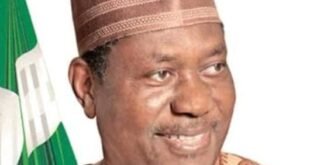
Now, with the appointment of Joseph Olasunkanmi Tegbe as Minister of Energy, expectations are rising again. However, unlike previous eras, Nigerians are no longer impressed by ambitious declarations. They demand results.
The question Tegbe faces is not whether he understands the scale of the crisis. It’s whether he can succeed where many before him have failed.
Nigeria’s electricity sector is littered with the ruins of great promise.

From the multi-billion National Integrated Power Projects (NIPP) projects of the Olusegun Obasanjo administration, to the Goodluck Jonathan-era privatization of generation and distribution companies, successive governments repeatedly promised that stable electricity was just around the corner. Under former President Muhammadu Buhari, Nigerians were told that the Siemens-backed Presidential Power Initiative would revolutionize transmission and distribution. The current administration of President Bola Ahmed Tinubu has also promised sweeping reforms, better manufacturing and a more efficient, market-oriented electricity sector.
Yet millions of Nigerians still rely on generators as their main source of energy.
The irony remains painful: Africa’s largest economy continues to generate just 4,000 to 5,000 megawatts for more than 200 million people, despite an installed capacity of more than 13,000 MW.
Entire industries have collapsed under the weight of self-produced electricity. Small businesses spend more on diesel than on salaries. Manufacturers complain about increased operating costs. Students study by torchlight. Hospitals struggle to preserve vaccines and use life-saving equipment. For many Nigerians, electricity is not simply an infrastructure issue; it is the dividing line between poverty and productivity.
This is why Tegbe’s appointment brings enormous pressure.
Unlike many previous political appointees in the sector, Tegbe comes into office with the image of a technocrat rather than a career politician. A chartered accountant and business consultant, he has built his reputation in the private sector through years of work in business consultancy, investment strategy and institutional restructuring. He previously served as Director General and Global Liaison for the Nigeria-China Strategic Partnership, where he was credited with helping to deepen investment engagement between Nigeria and Chinese investors in infrastructure, manufacturing and industrial development initiatives.
Prior to that appointment, Tegbe had a long corporate career spanning consulting, finance and business transformation. He worked with the multinational consultancy firm Deloitte and later became a senior corporate strategist with extensive experience in public-private partnerships, governance systems and economic planning. Supporters say this background gives him a better understanding of the financial and structural complexities that have crippled Nigeria’s energy sector for years.
Its defenders also point to its achievements in economic coordination and institutional reforms, arguing that the electricity crisis is no longer just a technical problem but a management and governance challenge that requires strategic execution, investor confidence and political discipline.
During his Senate screening, Tegbe outlined a reform agenda focused on improving gas supply, strengthening network reliability, speeding up metering, strengthening accountability among distribution companies and restoring financial discipline across the sector.
These priorities are significant because Nigeria’s electricity crisis is no longer just about generation. The problems are systemic.
Generation companies complain of unpaid debts and inadequate gas supplies. Distribution companies face huge financial losses, weak infrastructure, electricity theft and poor revenue collection. Transmission infrastructure remains fragile and outdated, leading to frequent system collapses and stranded power capacity.
The national network itself has become the symbol of institutional weakness. Power grid collapses have repeatedly thrown large sections of the country into darkness, disrupting economic activity and exposing the fragility of the system. Regulatory reports continue to show large gaps between installed generation capacity and actual available electricity supply.
For many Nigerians, these recurring failures have destroyed public trust.
Celebrating a Journalist, Abiodun Adeniyi, as Vice Chancellor, By Martins Oloja
Citizens openly wonder whether government officials really intend to resolve the crisis or simply manage it politically. Some blame corruption and weak regulation; others argue that decades of policy inconsistency and poor implementation are the real culprits.
This skepticism explains why Tegbe’s promises are greeted with cautious optimism rather than celebration.
However, his supporters believe he will come into office with some advantages. His experience in corporate restructuring and investment negotiations can prove useful in an industry desperate for efficiency, investor confidence and credible execution. But technical knowledge alone will not solve Nigeria’s electricity crisis.
What the sector needs most is political courage.
Any significant reform will involve difficult decisions: enforcing payment discipline, restructuring failing distribution companies, addressing subsidy distortions, improving tariff transparency, tackling electricity theft, and imposing greater private sector accountability. These reforms are politically sensitive because electricity affects every family and every business in the country.
The minister must also address the deeper institutional problem that has undermined previous reforms: weak governance.
Over the years, billions of dollars would be invested in energy infrastructure with minimal impact on supply. Projects are often launched with great fanfare only to disappear in bureaucratic delays, contract disputes or funding crises. Nigerians have grown tired of ceremonial appointments without measurable results.
This is why measurable objectives will count more than speeches.
If Tegbe hopes to win public trust, Nigerians will expect clear timelines, transparent reporting and visible improvements in supply stability. Citizens want fewer excuses and more responsibility. They want to know why power plants can’t get gas despite Nigeria’s huge natural gas reserves. They want to know why transmission bottlenecks continue for years after repeated intervention programs. They want to know why estimated billing persists despite promises of mass metering.
Above all, they want leadership that recognizes that electricity is critical to national development.
No serious industrial economy can thrive in darkness.
Countries that have transformed their economies have invested heavily in stable electricity infrastructure. Without reliable electricity, Nigeria’s ambitions for industrialisation, digital innovation, manufacturing growth and foreign investment will remain severely limited.
The challenge facing Tegbe therefore goes beyond repairing transformers or stabilizing the grid. Its real task is to restore credibility to a sector where public trust has almost collapsed.
There are signs that structural reforms may finally be gaining momentum. The Electricity Act 2023 opened the door for states to develop independent electricity markets, reducing over-reliance on the fragile national grid. Several states are already moving towards decentralized power arrangements.
But Nigerians have already heard about reforms.
What they are looking for now is evidence.
The success or failure of Tegbe’s mandate may ultimately depend on a simple question: can his administration deliver stable and predictable, even if gradual, improvements?
If he succeeds, he could become the minister who will finally begin the long-delayed transformation of Nigeria’s electricity sector.
If he fails, he risks joining a long list of officials whose promises have disappeared into the obscurity that Nigerians know all too well.
Stay up to date with the latest updates!
Join The ConclaveNG on WhatsApp and Telegram to receive real-time news alerts, breaking stories and exclusive content straight to your phone. Don’t miss a single title: sign up now!
Join our WhatsApp channel
Join our Telegram channel