JamzNG Latest News, Gist, Entertainment in Nigeria

The Federal Government, in collaboration with the United Nations and other agencies, has announced a major overhaul of Nigeria’s humanitarian and poverty reduction system with the adoption of a unified national framework known as the One Humanitarian – One Poverty Response System (OHOPRS).
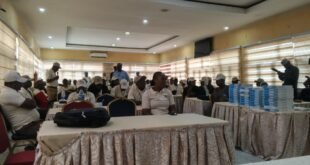
The Minister of Humanitarian Affairs and Poverty Reduction, Dr. Bernard M. Doro, at the end of a four-day national technical workshop held on Friday at the United Nations Headquarters in Abuja, said the new framework aims to address long-standing inefficiencies caused by fragmented interventions across government agencies and development partners.
He said for too long Nigeria’s efforts have been duplicated, disconnected and unable to produce lasting change.
“It’s not that support isn’t reaching people, it’s that our systems aren’t designed to take people from survival to self-sufficiency,” he said.
The minister emphasized that OHOPRS is not another government program, but a national operating system intended to unify coordination, data and funding.
He explained that under the new system, multiple registries will be consolidated into a single integrated national registry, while funding mechanisms will move from project-based approaches to shared, accountable frameworks.
He said the government also plans to introduce real-time monitoring systems to improve transparency and effectiveness.
Doro highlighted a story from the North East, where a mother of four described being trapped in a cycle of “intermittent help” despite receiving periodic help.
“We are always helped, but we never move forward,” the woman said.
According to the Minister, this report highlights the need for a systemic review that allows beneficiaries to definitively emerge from poverty.
The OHOPRS framework introduces a structured pathway for citizens, described as a “ladder of progress”.
This includes identifying vulnerable individuals through the National Social Registry, monitoring interventions through a unified beneficiary registry, guiding beneficiaries towards self-sufficiency through a path out of poverty, and supporting progress through a growth registry.
The Minister called for full alignment between federal and state institutions, local governments, development partners, the private sector and civil society organizations to ensure the success of the initiative.
He also linked poverty reduction to national stability, saying it should be treated as a matter of national security rather than charity.
“We are no longer satisfied with managing poverty. Our goal is to end it,” Doro said.
He said the adoption of the OHOPRS is in line with President Bola Ahmed Tinubu’s broader Renewed Hope agenda, which seeks to promote inclusive growth and long-term development across Nigeria.
Recommendations in a statement at the end of the workshop were to develop and implement a clear national roadmap with defined timelines, roles and accountability structures, as well as accelerate the creation of a secure and functional national data centre.