JamzNG Latest News, Gist, Entertainment in Nigeria
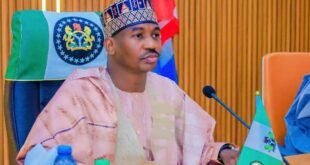
When Nasir Idris (Kauran Gwandu) took over the leadership of Kebbi State in 2023, he inherited a booming healthcare sector. Dilapidated health facilities lined communities across the state, reinforcing Kebbi’s unenviable position among the worst performing states in terms of maternal and child mortality rates in Nigeria.
As a man who seemed to understand that leadership begins with an honest diagnosis, he did not hesitate to lay bare the sad reality. In an interview with journalists, he revealed that there were hospitals where patients had to lie on the floor due to the lack of basic hospital beds. Considering what has been accomplished so far, this admission was truly a signal of intent. He has made it clear that he will not leave the industry in the same state he met it.
Governor Nasir adopted the resolution knowing full well that the challenges facing healthcare in Kebbi State were neither isolated nor simplistic; they were stratified. The first, which anyone approaching a healthcare facility is faced with, was the visible decay of the infrastructure. The second, not always visible, was the persistent shortage of qualified personnel. Then there was the age-old issue of poor welfare for healthcare workers, which over time had contributed to lower morale and, in some cases, to the migration of professionals out of the state. Addressing such a complex web of problems required a coordinated and holistic approach. This is exactly the path chosen by Governor Idris.
A look at hospitals donning new looks across Kebbi today shows that there is a renewed sense of urgency in the healthcare sector, renovation and upgrades of facilities are being pursued with a speed that available resources can sustain. In Argungu, home to the ancient UNESCO-recognised Argungu Fishing Festival, residents recently expressed appreciation following the complete renovation of the Argungu General Hospital. The structure, once a symbol of abandonment, has been transformed into a modern health center equipped with improved diagnostic and therapeutic infrastructure.
This intervention in Argungu is not an isolated case. In Birnin Kebbi, Sir Yahaya Memorial Hospital, one of the state’s major referral centres, has undergone significant renovation and re-equipment works. Likewise, the upgrades have been extended to facilities such as Yauri General Hospital and Zuru General Hospital, along with several primary health centers spread across local government areas.
The rationale behind the deliberate focus on primary health centers is both strategic and pragmatic. While tertiary institutions often dominate policy conversations, healthcare delivery in Nigeria fundamentally starts at the grassroots. Primary health centers remain the first point of contact for most citizens, especially those in rural communities. Therefore, the government, by strengthening these facilities, not only eases pressure on secondary and tertiary hospitals but also ensures that preventable conditions are addressed promptly before they develop into life-threatening complications.
As expected, this layered investment is starting to deliver results. Improved infrastructure has increased patient trust in public health institutions, while access to care in previously underserved areas has improved incrementally. While the journey is far from complete, the direction is unmistakable.
But even the best equipped facilities cannot function without qualified personnel. This reality appears to have shaped the administration’s next course of action. Governor Idris was faced with the choice of whether to continue to rely largely on health workers trained outside the state or build a domestic pipeline that could sustain the sector in the long term. He chose the latter.
One of the most important initiatives under this vision is the establishment of the Kauran Gwandu College of Nursing and Midwifery Sciences in Ambursa. The institution is designed to expand training capacity for nurses and midwives, directly addressing chronic shortages of health workers, particularly in rural communities. By investing in local training, the state not only produces labor, but also increases the likelihood of retention, as locally trained professionals are often more likely to serve within their communities.
However, training alone is not enough. Retention is equally critical, and retention is largely driven by welfare. Recognizing this, the Idris administration has introduced a series of welfare improvement measures aimed at motivating health workers and stabilizing the workforce.
Among these measures is the implementation of improved remuneration structures for healthcare staff, including the payment of hazard pay and adjustments in line with national healthcare salary parameters. The administration has also prioritized the timely payment of wages and benefits, an issue that has historically plagued the industry in many states. Furthermore, recruitment initiatives have been launched to fill manpower gaps, thereby reducing the workload on existing staff.
There are also targeted incentives to encourage postings to rural areas, where shortages are often more acute. By making rural services more attractive, the government is attempting to correct the uneven distribution of health workers between urban and rural areas. Training opportunities and professional development programs have further complemented these efforts, giving healthcare professionals a sense of career progression rather than stagnation.
Taken together, these welfare interventions reflect the understanding that healthcare reform is not just about buildings and equipment, but also about the people who do the work, such as doctors, nurses, midwives and support staff who form the backbone of the system.
What is emerging in Kebbi State, therefore, is not a series of disjointed projects but a coordinated attempt at systemic reform. Infrastructures are being rebuilt as quickly as human capabilities are developing. Likewise, welfare issues are addressed. This understanding is that each of these elements reinforces the other.
Of course it would be premature to declare total victory. The health challenges in Kebbi State, as in many parts of Nigeria, are deeply rooted and will require sustained commitment over time. Issues such as population growth, financing constraints and evolving health threats will continue to test the resilience of the system. However, what can be said with some certainty is that the foundations for a functioning healthcare system are being laid deliberately.
In a country where political continuity is often sacrificed on the altar of political transition, the first steps taken by Governor Nasir Idris in the Kebbi healthcare sector stand out for their clarity of purpose and structural focus. The emphasis is not just on immediate optics but on building a system that can last. If sustained, these interventions have the potential to significantly alter Kebbi State’s health landscape, reducing maternal and child mortality, improving life expectancy and restoring public trust in government health institutions.
And there is no better way to ensure that these gains are sustained than by re-electing Governor Idris for another term in the next election. Without running the risk of appearing partisan, I believe it is better to pitch your tent with those who are laying solid foundations rather than getting sucked into the empty rhetoric of those who promise to build castles in the air.
While, for now, the signs are modest but encouraging, it should also be noted that healthcare is an industry where incremental progress naturally translates into lives saved. So, imagine these modest gains being swept away by an administration less inclined to provide health care. This is where the people of Kebbi have a role to play. They can ensure that these incremental changes continue. And that means standing with Governor Idris in the 2027 elections. He has clearly demonstrated that he understands what is needed, not just in healthcare but in every sphere of government. Yet, only continuity can ensure that its impact plan can reach full maturity.