JamzNG Latest News, Gist, Entertainment in Nigeria

The Federal Government has stepped up efforts to implement the Women’s Economic Empowerment (WEE) policy, warning that persistent gender gaps, particularly in access to finance for women-owned micro, small and medium enterprises (MSMEs), are undermining national productivity and costing the economy trillions of naira every year.
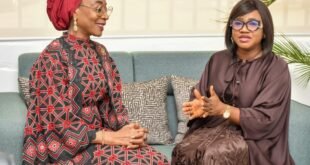
The Minister of Women Affairs and Social Development, Imaam Sulaiman – Ibrahim, stated this on Thursday in Abuja at the meeting on Women Economic Empowerment, Mid-Term Review and National Acceleration and Partnership Session.
The minister said that although women own more than 40% of SMEs, they receive less than 15% of formal financing, a disparity that officials describe as a systemic constraint on growth.
She said the WEE policy, now integrated into the Renewed Hope social impact interventions (RHSII-774), is designed to unlock the full economic potential of women and promote inclusive national development.
The Minister revealed that the WEEE policy has already been domesticated in four states – Kaduna, Kano, Lagos and Kwara, setting the pace for aligning national priorities with sub-national realities, while over two-thirds of the states have formally committed to the process at various stages.
She emphasized that domestication under Nigeria’s federal structure is not merely procedural but transformative, ensuring that policy translates into tangible services for women on farms, markets, businesses and communities.
To deepen implementation, the government also strengthened institutional coordination through the High-Level Presidential Advisory Council on Support for Women and Girls, designed to mobilize public, private and donor capital, positioning women’s economic empowerment as a whole-of-government priority.
She noted that despite women making up more than 70% of Nigeria’s agricultural workforce, only about 21% of land managers are women, with productivity gaps caused largely by limited access to finance, land and inputs.
Similarly, women own more than 40% of SMEs but receive less than 15% of formal financing, an imbalance that the government says continues to drain trillions of naira from the economy every year.
The Minister highlighted that the WEE policy, now incorporated into RHSII-774, is being implemented through targeted programs such as EmpowerHer, WAVE 774, PowerHer 774, Her SafeHaven, Families First Initiative and DigitalHer, aimed at promoting inclusion, productivity and resilience at scale.
She added that the administration’s declaration of 2026 as the Year of Families and Social Development reinforces the policy’s broader vision of linking women’s economic empowerment to family stability and national development.
Speaking, the Minister of Budget and Economic Planning, Senator Abubakar Atiku Bagudu, said the economic inclusion of women is not only a social priority but a key driver of Nigeria’s growth strategy.
It highlights that Nigerian women, who make up nearly half the population, are already deeply engaged in agriculture, the informal economy and, increasingly, entrepreneurship and innovation.
However, structural barriers continue to limit their access to finance, markets, skills and productive resources, preventing the country from fully benefiting from their contributions.
The Minister highlighted that gender gaps in labor participation, productivity and access to capital have a measurable cost to the economy.
He highlighted the progress made under the WEE policy, stressing that it has moved from planning to implementation.
States such as Kaduna, Kano and Lagos are already domesticating the policy, while more than 20 others are in various stages of adoption.
A cost-based framework is also now in place which provides clarity on investment needs.
Likewise, the United Nations Representative for Women in Nigeria and ECOWAS, Beatrice Eyong, said this convocation is strongly aligned with President Bola Ahmed Tinubu’s Renewed Hope agenda, which places inclusive economic growth, job creation and social protection at the heart of Nigeria’s development journey.
She emphasized that women’s economic empowerment is not marginal in this agenda; is central to its success, affirming that women’s economic empowerment remains central to Nigeria’s development aspirations.
“It is in this context that the Women’s Economic Empowerment (WEE) policy was developed to address these deeply entrenched inequalities through coordinated, multi-sectoral action.
“Halfway through implementation, there has been considerable progress. There has been increased policy focus on women’s entrepreneurship and financial inclusion, increased skills and livelihood programs targeting women and young women, greater private sector engagement in inclusive value chains, and growing recognition of unpaid care work as an economic and social policy issue,” she said.
The UN country representative noted that the organization remains proud to support this progress through targeted system strengthening interventions.