JamzNG Latest News, Gist, Entertainment in Nigeria
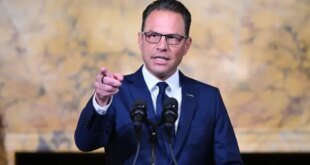
US Vice President J.D. Vance has expressed doubts about plans to livestream the scheduled execution of former US Army Major Nidal Hasan, saying he will not watch the broadcast if it goes ahead.
Vance made the remarks Friday while responding to reporters’ questions about the proposed broadcast of Hasan’s execution by firing squad, scheduled for Dec. 3, 2026.
“I don’t know if that’s actually going to happen,” Vance said, adding that “if it’s live streaming, I won’t watch it.”
The Pentagon announced the livestream proposal earlier this week, with Defense Secretary Pete Hegseth arguing that broadcasting the execution would demonstrate the consequences of attacks on military personnel.
However, the proposal has drawn criticism from lawmakers of all parties, religious leaders and human rights officials, with concerns that public broadcasting of an execution could turn capital punishment into a spectacle.
Trump supports the proposed broadcast
President Donald Trump has expressed support for livestreaming the execution, although the Pentagon has yet to make a final decision on the proposal.
Speaking to reporters outside the White House on Friday, Trump said he “absolutely” supported the broadcast but acknowledged that the Pentagon was still evaluating the issue.
Trump dismissed concerns that images of the execution could be used as propaganda by terrorist organizations, arguing that Hasan deserved the death penalty for the attack.
Hegseth had previously defended the proposal, saying people needed to understand that serious consequences follow attacks of that nature.
Hasan was convicted of the November 5, 2009 shooting at Fort Hood, a U.S. military base in Texas, in which 13 unarmed soldiers were killed and 32 other people injured.
The attack remains the deadliest non-combat shooting on a U.S. military installation.
Lawmakers and religious leaders oppose livestreaming
The proposed broadcast has drawn opposition from several U.S. lawmakers, including some who support sentencing Hasan to death but believe the execution should not be televised.
Republican Senator John Curtis warned that broadcasting the execution could turn capital punishment into entertainment and encourage the public to fascinate death.
He argued that justice for victims should be administered solemnly, adding that broadcasting an execution would demean society without necessarily serving as an effective deterrent.
Democratic Senator Chris Murphy also condemned the proposal, calling it “disgusting” in an interview with CNN and comparing it to executions carried out by the Islamic State.
Republican Rep. Austin Scott said he supported sentencing Hasan to death but rejected the idea of livestreaming it, arguing that such broadcasts were associated with jihadist groups and that the United States should be held to different standards.
John Bolton, who served as national security adviser during the first Trump administration, also questioned the need for live streaming.
Speaking on BBC Radio 4 PM, Bolton said interested parties could witness the execution in person or receive reports about it without broadcasting the event to the public.
The US Conference of Catholic Bishops also condemned the proposal, expressing “shock and great sorrow” over the project.
The UN human rights office told AFP that live-streaming the execution would amount to a public execution and violate the absolute ban on torture.
The 2009 Hasan attack and planned execution
Hasan, a former U.S. Army psychiatrist, opened fire inside a crowded medical building at Fort Hood, where soldiers preparing for deployment were waiting for medical tests and vaccinations.
During his 2013 court-martial, Hasan admitted he was the gunman and apologized for what he described as “any mistakes.”
He told the court he believed he was protecting Muslims and the Taliban in Afghanistan from the US military.
Vance described the attack as the worst terrorist attack on American soil outside of the September 11, 2001 attacks, noting that Hasan had been responsible for treating soldiers facing mental health and other problems.
The vice president said Hasan exploited the trust placed in him by the soldiers he was supposed to help.
Under U.S. military law, an execution must receive presidential approval and undergo appellate review before it can proceed.
If carried out, Hasan’s execution would be the first U.S. military execution in more than 60 years.
The debate comes in the context of broader international scrutiny of public executions. Amnesty International reported that 11 public executions were recorded in Iran in 2025, while another six were reported in Afghanistan.
BBC News