JamzNG Latest News, Gist, Entertainment in Nigeria
The earthquake from the Russian Peninsula Kamchatka has triggered a tsunami warning in Japan, China, Hawaii, the US and Central America and Latin.
That 8.8 The earthquake is large occurs 12 miles below the surface of the water and about 80 miles southeast of the city of Petropavlovsk-Kamchatsky, Northeastern Russia On Wednesday, according to the US Geological Survey.
The first five waves hit Hawaii; The latest tsunami warning
So far, this is the most powerful in the record since the Japanese earthquake 9.1 in 2011, which killed more than 15,000 people, and the sixth strongest since the record began.
The tsunami had begun to reach land in Japan and Hawaii, with an urgent warning released throughout the Pacific – from Asia to the US and Canada. This is what we know so far.
How does this start?
Earthquakes hit a shallow depth of 80 miles southeast Petropavlovsk -Kamchatsky – A city of 165,000 people along the coast of Avacha Bay Russia, around noon on Wednesday, local time (1 in the morning of England).
Waves are recorded up to 4M (13 feet) in Severo-Kurilsk in the Kuril Islands where emergencies have been stated.
The Russian Tass News Agency reported people who ran to the streets, with a trembling balcony, furniture and glass broke in the house, and the car swayed on the road. Around 2,700 people were evacuated.
Electricity cutting is also reported throughout the Peninsula.
Some people were injured and had to seek medical assistance, according to Regional Minister of Health Oleg Melnikov.
“Unfortunately, there were some people who were injured during a seismic event. Some were injured while running outside, and one patient jumped out of the window. A woman was also injured inside the new airport terminal,” he said.
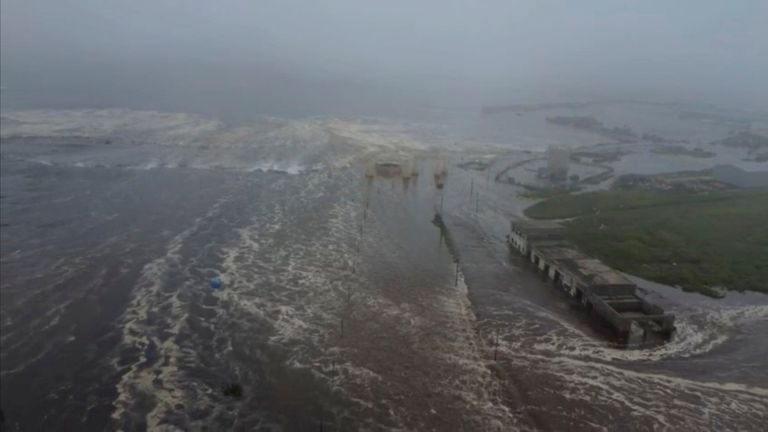
Severo-Kurilsk, Russia. PIC: Russian Science Academy/Reuters
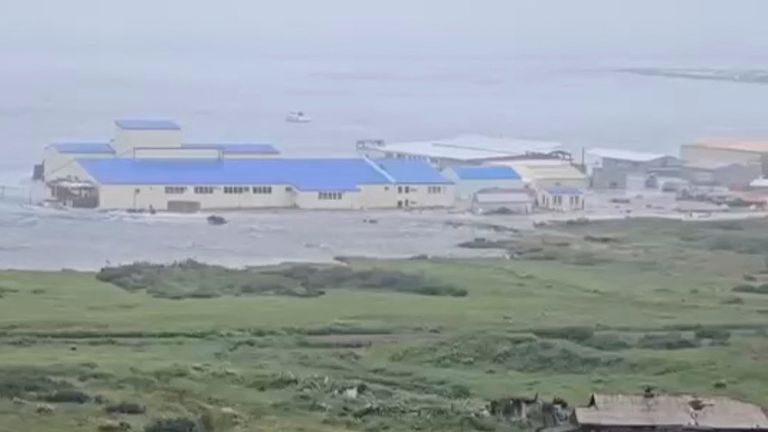
A strong wave swallowed coastal buildings in Severo-Kurilsk. Pic: Reuters
Where else tsunami crashing so far?
Injury has been reported in several countries, but so far there is no known death.
Outside Russia, the waves have begun to reach Japan.
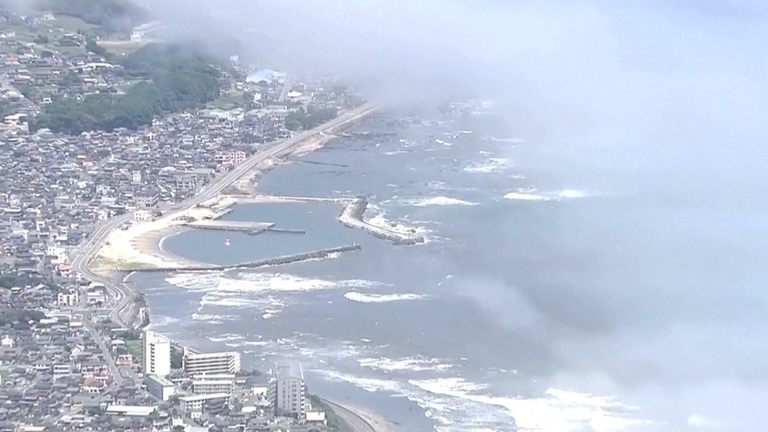
Tsunami wave off the coast of Japan. Pic: Ap
Two million people have been evacuated along the country’s Pacific coast, with evacuation advice in more than 220 cities, according to the Fire and Disaster Management Agency. Nuclear power plants also stop activity.
One caused by a 60cm wave (2FT) on Hokkaido Island and others reached 50cm (1.6 feet) at the Ishinomaki port in the north of the country. In Northern Iwate, a 40cm (1.3ft) wave is registered in the Kuji port.
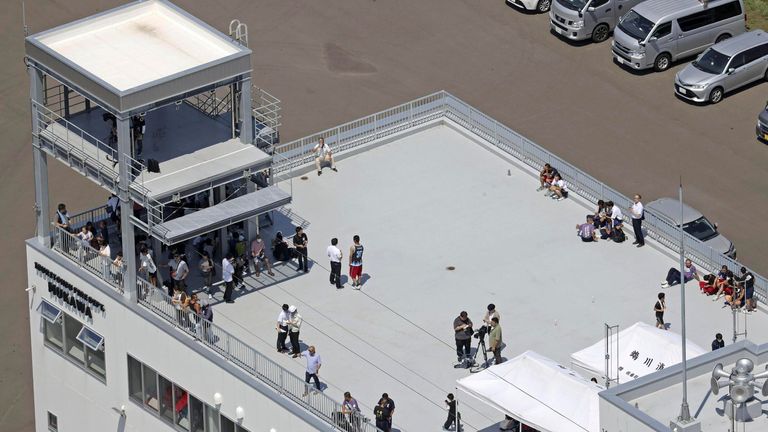
People were evacuated to the roof of the fire building in Mukawa, Hokkaido. PIC: Kyodo/AP
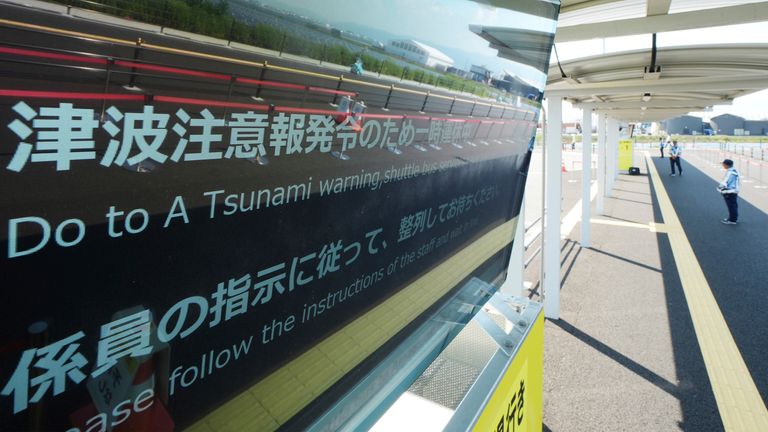
Tsunami warning in Japan. Pic: Yomiuri Shimbun/AP
In Hawaii, people have been urged to find a higher place after the waves are measured 1.82m (6 feet).
Earthquake sirens exploded on the streets, with closed beaches and evacuated coastal areas. Maui Airport was closed and 200 people took refuge inside, Hawaii Governor Josh Green added.
Although the waves have not “consequences”, Mr. Green urges people to “lie down and watch TV” for further announcements.
In Alaska, a 30cm wave (1 foot) was observed in the Amchitka and Adak community, according to Dave Snider, a tsunami warning coordinator.
Read more from Sky News
At least 30 killed in Flood China
17 Killed in Turkish Forest Fires
Three Killed in Shooting on Tourism Island
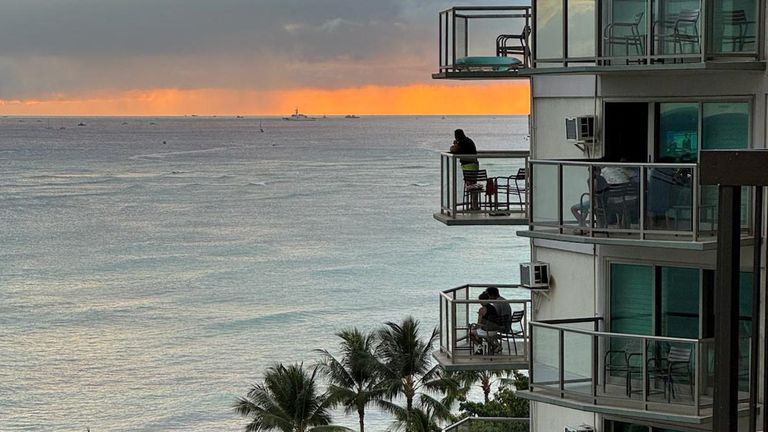
A hotel facing Waikiki Beach in Hawaii on Wednesday. Pic: Reuters
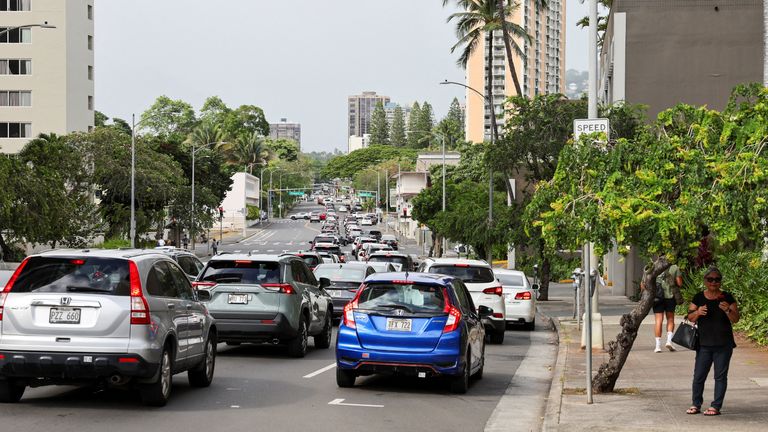
Tsunami warning for the Pacific region
Where is the other warning?
In China, the country’s tsunami warning center has issued a warning to the East Coastal region – especially Shanghai and Zhejiang, who are under aware of Typhoon Comay, because the land on Wednesday.
Countries along the US west coast have issued tsunami advice, including Oregon, the state of Washington, and California.
The Oregon Emergency Management Department warned: “This is not the main tsunami, but dangerous currents and strong waves can pose a risk for those near the water.”
President Donald Trump posted on X: “A Tsunami Watch applies to Alaska and Pacific Coast of the United States. Japan also prevents. Please visit the tsunami.gov/ for the latest information. Stay strong and stay safe!”
The Mexican Navy said that the tsunami waves would hit the north coast of Mexico in Ensenada near California, and could advance to Chiapas.
In New Zealand, the State Disaster Management Agency issued a warning to the coastal area, which is likely to see “strong and unusual currents and unpredictable surges on the coast”.
At present there is no need for official evacuation orders, he added, but people are told to stay away from the beach.
The Pacific Islands nations of Fiji, Samoa, Tonga, Micronesia, and Solomon Islands all issued warnings, because their lowland topography put them on certain risks.
What happened during the tsunami – and why are they so dangerous?
The tsunami is a very long series of waves that are usually caused by earthquakes below sea level. Although rarely, they can also be triggered by landslides, volcanic activity, and sometimes with extreme weather above the sea.
Unlike normal waves, which are driven by the wind, the tsunami moves through the entire sea column – from the seabed to the surface.
This means they can be very strong and fast – reaching speeds like a field of about 500mph in the deepest ocean.
Their strength means they can stretch the entire sea basin, impacting many countries. Boxing Day Tsunami 2004 caused damage in 17 countries.
The tsunami became the most dangerous when they reached the ground. Dusun water sees the wavelength decreases – but the height is high.
High waves can be very dangerous. It only takes six inches of water to drop someone from their feet and duplicate it to sweep the car.
Tsunami waves are also dangerous when they return to the sea, carrying heavy debris.