JamzNG Latest News, Gist, Entertainment in Nigeria
Nigeria spends more than $ 10 billion every year for food imports, including wheat, rice, sugar, fish, and even tomato paste, according to the Minister of Agriculture and Food Security, Senator Abubakar Kyari.
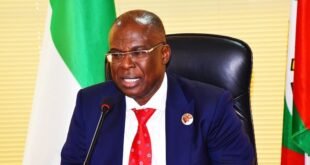
The Minister conducted a disclosure on Tuesday at the First Bank of Nigeria Ltd. 2025 Agric and Export Expo in Lagos. He was represented at the event by the advisor in particular, Mr. Ibrahim Alkali.
Kyari, who condemned the high cost of agro-import, said the trend underlined the urgent need to expand financing for agriculture to increase domestic production and strengthen Nigerian export capacity.
“Nigeria spends more than $ 10 billion per year to import food such as wheat, rice, sugar, fish and even tomato paste. Agriculture has contributed 35 percent of our gross domestic product and employs 35 percent of our workforce, we sit above 85 million hectares from urban land with youth population more than 70 percent. We have to rethink how we finance agriculture, “he said.
The Minister emphasized that the administration of the Tinubu Bola President was committed to achieving food sovereignty, emphasizing that the country must reduce its dependence on foreign imports.
Also read: NCAA Invite Ibom Air Crew, Comfort Emmanson Over Viral in-Flight Anngycation
“The government of President Tinubu has explained that food sovereignty is the goal. Nigeria not only has to feed himself, but also does with its own conditions, free from excessive dependence on imports. Covereignty means ensuring that no Nigerians are starving because of shocks in the chain of global food supply, which allows the community to stand on the power of our land We, our people, our people, our people, our people, our people, and our people, our people, our people, our people, and our people, our people, our people, and our products, “Our people, our people, our people, our people, our people, our people, which we have.

He stressed that increasing local production and supporting exports must go hand in hand.
“Increasing domestic production and development support for exports is not a separate agenda. They are two sides of the same coins. We have land, labor, and markets, but we do not have a financing system, additional value and infrastructure that converts food potential. From farmers’ loans fragmented to structured financial systems that attract significant capital and from stereotypical perceptions to increasing youth participation in the agricultural sector,” he explained.
Kyari further urged stakeholders to adopt an innovative financing model and stronger mechanism that will change agricultural performance.
“Nigeria can do better if we begin to think critically and increase mechanisms such as the distribution of income, finance, agricultural objectives by triggering performance, calculating the attacker contract, paying-as a harvest, and the rest. This is not an abstract theory. They work in the real economy,” he said.