JamzNG Latest News, Gist, Entertainment in Nigeria
A new wave of deadly attacks across Nigeria, ranging from attacks on rural communities to the killing of security personnel, has once again made insecurity a topic of national conversation. Even as the country posts its most sustained increase in security spending in years, violence remains widespread, raising questions about how effectively the increased budget is delivering safety on the ground.
The 2024 and 2025 budget data, as well as the federal government’s proposed allocations for 2026, show a steady expansion of funding for Nigeria’s core security and defense institutions. Between the Army, Police, and paramilitary agencies, security spending has grown to become one of the largest components of public spending.
The army took the lion’s share
At the center of Nigeria’s security architecture, the Nigerian Army, which continues to provide the largest allocation, in 2024, received ₦789.81 billion. The figure will almost double by 2025 to ₦1.49 trillion, and under the 2026 proposal, the figure will increase again to ₦1.50 trillion.
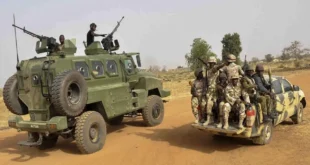
This trajectory reflects the Army’s central role in counter-insurgency operations in the North East, anti-banditry campaigns in the North West, and internal security deployments in various regions. However, the persistence of attacks, including deadly ambushes and raids on civilian communities, suggests that higher spending has not significantly changed security outcomes.
Police funding increases
The Ministry of Police, which oversees the Nigerian Police, remains the second largest recipient of security funding. The allocation reached ₦969.65 billion in 2024 before increasing sharply to ₦1.31 trillion in 2025. The 2026 draft budget increased the amount to ₦1.33 trillion.
This steady increase comes amid growing public concerns about violent crime, kidnapping and excessive use of police resources. Although the police budget has increased by more than ₦360 billion between 2024 and the proposed 2026 figure, insecurity related to communal clashes and criminal networks continues to claim lives in several states.
The Navy and Air Force experienced consistent growth
Expenditures on the Nigerian Navy and Nigerian Air Force are also trending upward, albeit at a more moderate pace. The Navy’s budget increases from ₦211.16 billion in 2024 to ₦442.52 billion in 2025, with a slight increase to ₦443.92 billion proposed for 2026.
The Air Force, which plays a key role in air surveillance and strike operations against armed groups, saw its allocation increase from ₦203.63 billion in 2024 to ₦376.78 billion in 2025. For 2026, the government has proposed ₦407.15 billion.
Paramilitary and coordinating agencies
Other security institutions also showed a similar gradual growth pattern. The Nigerian Security and Civil Defense Corps (NSCDC) received ₦150.78 billion in 2024, increasing to ₦240.91 billion in 2025 and a proposed ₦244.26 billion in 2026. The Corps is playing an increasing role in protecting critical infrastructure and supporting internal security operations.
Funding for Defense Headquarters, which is responsible for the coordination of all armed forces, increased from ₦146.13 billion in 2024 to ₦257.06 billion in 2025, with the 2026 proposal maintaining roughly the same level of ₦257.01 billion.
In contrast, allocations to the Ministry of Defense have moved in the opposite direction. From ₦68.51 billion in 2024, funding fell to ₦50.98 billion in 2025 and is proposed to fall further to ₦41.24 billion in 2026, even as operational spending in the armed forces continues to increase.
Overall, the data shows a clear trend, Nigeria is spending more and more every year on security. Major institutions now receive trillions of naira collectively, reflecting the magnitude of the security challenges facing the country.
But the continued existence of deadly attacks underscores the growing gap between spending and results. As society continues to bury victims of violence, increasing the security budget has become a statement of intent and a test of effectiveness, one that Nigerians will continue to judge not by numbers on paper, but by whether the murder rate is finally starting to decline.
By: James Odunayo