JamzNG Latest News, Gist, Entertainment in Nigeria
By Victor Osula Abuja
The Accountant General of the Federation, Ogunjimi, will appear on Monday
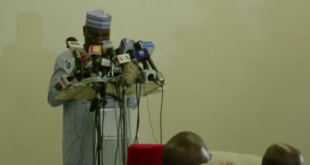
New revelations emerged on Friday in the House of Representatives investigation into the controversial Presidential Foreign Investment Promotion Council (PFIPC), as the Director General of the Federation Budget Office, Tanimu Yakubu, revealed that although more than ₦1.3 billion had been allocated to the council in the 2026 budget, not a single kobo of public funds was ever released because Nigeria’s financial guarantees prevented the spending from taking place.
Yakubu told lawmakers that the Budget Office neither created nor legitimized the council, insisting that it was merely discharging its statutory responsibility after receiving official documents from the institution that investigators now suspect were falsified.
The Budget Office chief’s appearance before the House Ad Hoc Committee marked another critical phase in the widening investigation into the alleged illegal establishment and financing of the PFIPC, a scandal that has already implicated several government institutions and prompted scrutiny of how the council achieved official recognition and budgetary provisions despite growing questions about its legal status.
The investigation follows previous moves by the Presidency to distance itself from the council, as lawmakers seek to establish whether public officials were complicit in the preparation of documents now alleged to have been falsified to facilitate the council’s operations.
Yakubu claims the Budget Office did not establish the council or approve its existence, recruitment, salaries or budget code. According to him, the office simply fulfilled its constitutional responsibility by assessing the financial implications of approvals and establishment permits received from other statutory state institutions.
“The Office of the Budget did not create the council. It did not assign its budget code. It did not approve its establishment. It did not grant its employment waiver. It was given official instruments and did what the law required of it. It measured their fiscal effect,” he told the committee.
Yakubu revealed that while the PFIPC requested ₦3.8 billion as staff costs, the Budget Office rejected the proposal after conducting an independent assessment.
Using the approved institution and salary structure prescribed by the National Commission on Salaries, Incomes and Remunerations, the agency recalculated the requirement and arrived at ₦802,978,783.
“This estimate did not form the basis of the Budget Office’s recommendation. The Budget Office rejected it and made an independent calculation. This calculation resulted in ₦802,978,783. This was not a concession to the council. It was the Budget Office’s fiscal proposal,” he explained.
Yakubu pointed out that despite the allocation, the Budget Office deliberately withheld the mandatory financial authorization required before any federal agency could begin recruitment, enroll workers in the Integrated Payroll and Personnel Information System (IPPIS), or begin payment of salaries.
“There was therefore no financial settlement. There was no legal hiring. There was no payroll entry. There was no salary payment,” he said.
He explained that although personnel costs accounted for approximately 61.63% of the City’s appropriations, no funds were ever reached.
“Not a single naira has been taken from the staff allocation. There is no staff expenditure to be recovered because no expenditure was ever made,” Yakubu added.
The Budget Office chief also revealed that the council’s ₦200 million general allocation remained intact because the treasury warrants and cash guarantees were never issued.
Similarly, the capital allocation of ₦300 million did not progress beyond the appropriation stage because none of the legal procurement requirements prescribed by law were met.
He said no ministerial tender committees had approved any contracts, no no objection certificates had been issued by the Office of Public Procurement and no treasury warrants or cash guarantees had been given.
“No procurement has reached the point where expenditure would have occurred. No ministerial tender committee has approved a transaction. No no-objection certificate has been issued. No treasury mandate has followed. No cash reimbursement from the Treasury,” he said.
According to Yakubu, the episode demonstrated that Nigeria’s public financial management framework worked exactly as intended.
“The law doesn’t get the money back after it’s gone. It stopped the spending before it started,” he said.
The hearing took a dramatic turn when committee members questioned the legal basis on which the PFIPC secured the budgetary provisions after reviewing what was presented as the law establishing the council.
Committee member Rep. Abubakar Fulata argued that the document lacked the essential features of a valid Act of Parliament, including a gazette number, the signature of the Clerk of the National Assembly and evidence of presidential assent.
“The alleged law is very clear. It is not authentic because it did not carry the gazette number, it did not carry the signature of the clerk of the National Assembly and it did not bear the signature of Mr. President,” Fulata said.
He criticized government agencies for not verifying the document’s authenticity before relying on it for official decisions that ultimately culminated in budget allocations.
Responding, Yakubu insisted that the Budget Office never relied on the purported law to determine staff costs. Instead, he said the office based its calculations strictly on establishment permits, hiring approvals and salary guidelines issued by the relevant legal authorities.
“We do not rely on any tool to calculate personnel costs other than the establishment permit and directives from the National Commission on Salaries, Incomes and Remunerations,” he said.
The committee’s chairman, MP Yusuf Gagdi, defended the Budget Office’s conduct, saying evidence before lawmakers indicates the agency complied with all procedural requirements before making budget provisions for the council.
According to him, the commission had already established that the documents on which several state bodies relied were later revealed to be suspected fakes.
“The question is whether the Office of the Budget allocated a budget to this agency without the agency meeting the requirements. The answer, based on the documents available to us, is no. I repeat, no,” Gagdi said.
He noted that the investigation has now shifted from examining the actions of the Budget Office to uncovering how the allegedly falsified documents ended up in official government records.
“The agency met all the requirements that the Office of the Budget needed before allocating a budget. The question now is whether those documents were authentic. That is what this commission is investigating,” he said.
Gagdi announced that the Federation’s accountant general will appear before the committee on Monday to explain how the PFIPC obtained its budget code, while officials from other agencies involved in drawing up the council’s documents will also testify.
He expressed confidence that the commission will conclude its work next week.
“By the special grace of God, we will conclude our findings and be done by next week,” the president said.
Post views:
137