JamzNG Latest News, Gist, Entertainment in Nigeria

There is something amusing about politicians who suddenly discover the importance of a problem only after they have left office. While they had the power to act, the problem was not important enough. But once they are out of government, they develop an extraordinary sense of outrage and begin speaking as though they had spent their entire political lives fighting the very failures they once had the opportunity to correct.
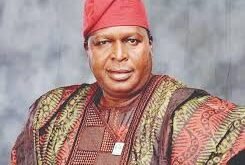
I think this succinctly describes Manir Dan Iya, former deputy governor and currently the ADC flags bearer for the 2027 gubernatorial election in Sokoto State, and his outrage about the persistence of water crisis in Sokoto State despite the humongous amount of money spent on the problem by the current administration of Governor Ahmed Aliyu.
It takes a special kind of political confidence—some might call it audacity—to spend eight years in government and later return to lecture the people about the smoke coming from the machine. And it takes even more confidence to ask questions about a water crisis when one was part of the administration that had every opportunity to prevent the crisis.
This is why the comments attributed to Manir Dan Iya about the water struggles of the people of Sokoto are difficult to take seriously. Not because an opposition politician has no right to ask questions, but because Sokoto people also have memories. And memories have a way of surviving political convenience.
So, if Manir Dan Iya has suddenly found his voice on water, perhaps the people of Sokoto are entitled to ask where that voice was when he and his principal had the power, resources and, more importantly, eight full years to ensure that water did not become a political talking point in the first place.
Manir Dan Iya was deputy governor to former Governor Aminu Waziri Tambuwal. Together, they governed Sokoto State for eight years, a period which many residents of the state remember for serious challenges in public water supply. So, it is painful to hear Iya question the Aliyu administration’s use of public funds because, according to him, water crisis still persist within the Sokoto metropolis and indeed, Sokoto State.
Now, no one said holding the incumbent government in Sokoto to account is out of place. That’s not the point of this intervention. In fact, asking questions is one of the fundamental responsibilities of the opposition, just as citizens have the right to demand explanations from those entrusted with public resources. However, that the questions are being asked by the same people who had eight years to address the water crisis, but bequeathed a system that still required massive intervention, is the problem.
The message is sometimes as good as the messenger. And since Iya has decided to raise questions, I believe the Sokoto people are equally well within their rights to ask questions and demand clarifications.
What exactly did Tambuwal and Iya do during their eight-year tenure in government to solve water supply troubles for the people of Sokoto State? This is a pertinent question because the water crisis in Sokoto did not begin in 2023.
The major water schemes which include Tamaje, Gagi, Old Airport, Mana, Runjin Sambo and Rugar Liman were initiated by the government of Aliyu Wamakko Magatakarda as part of efforts to expand the production and distribution capacity of the Sokoto urban water supply system. The schemes were designed to strengthen water abstraction, pumping, treatment, storage, transmission and distribution, which are the critical components required for any sustainable urban water supply architecture.
As at the time the Wamakko administration left office, it was believed that only about ₦500 million was required to complete the outstanding works on the major schemes. Sadly for the people of the state, the Tambuwal administration in which Iya served as deputy governor did not complete them.
Whether one chooses to argue about the exact figures or not, the indisputable question remains: why were critical water infrastructure projects allowed to remain uncompleted for years when the people of Sokoto desperately needed a dependable and sustainable supply of potable water?
As one of those in Sokoto State who lived through that painful period of acute water shortage which characterised the Tambuwal administration, I was understandably joyous when the Aliyu administration came and immediately moved to alleviate the water crisis within its first 100 days in office.
But beyond the interventions, the administration understood that temporary solutions could not permanently resolve a structural problem. To put the water challenges behind once and for all, there was a need to review the outstanding contracts and assess the state of the major water works.
Before the long-term projects could be completed, however, alternative sources of water to cushion the effects of the acute shortage and reduce total dependence on the centralised water production system were conceptualised. Pursuant to this contracts for alternative water sources were awarded, particularly in areas where residents were experiencing serious water difficulties. The idea was simple: while the major water schemes were being completed, rehabilitated or restored, communities should not be left entirely at the mercy of a weak and overstretched central water supply network.
This was why Governor Aliyu approved the drilling of 42 solar-powered boreholes across the metropolitan area. These boreholes were meant to provide supplementary and decentralised sources of water, reduce excessive dependence on the main water works and ensure that communities could access water while the government pursued the larger and more sustainable intervention in the urban water supply system. Of course, boreholes are not substitutes for a comprehensive municipal water supply network, but they can serve as important complementary sources, particularly when a major system is undergoing rehabilitation or expansion.
The truth is, Governor Aliyu would not have had to go through such a long route, committing over ₦14 billion of scarce public resources to the completion and rehabilitation of major water infrastructure, had the Tambuwal/Iya administration lived up to its responsibility to protect and provide the people with critical sources of sustenance and the dignity of the human person, of which access to potable water is a vital aspect. This is why is hocking that the same those who had the opportunity to address the problem are the same people now raising questions which, in effect, expose the consequences of their own years in government.
The intervention of the Aliyu government was bold and total. It committed to the completion of the six major water schemes at Tamaje, Old Airport, Gagi, Mana, Runjin Sambo and Rugar Liman, with the overall programme gulping over ₦14.1 billion. When fully operational, the schemes are expected to significantly improve the production capacity of the Sokoto urban water supply system, with projections putting their combined output at about 40 million gallons per day.
That is not a small intervention by any standard. Water goes through a long process before ending up in taps and homes. Raw water must be abstracted from the source, conveyed through the appropriate infrastructure, treated where necessary, pumped into storage facilities and transmitted through trunk mains and distribution networks before it reaches consumers. Any serious attempt to solve an urban water crisis must therefore address the entire chain of water production and distribution, from the source to the household.
This is what the Aliyu governmentl is doing and it’s already yielding fruits. Residents of Sokoto are aware that some of the major water projects inherited by Aliyu have been completed. The Old Airport and Tamaje water schemes are among the completed works which have since been commissioned. The Old Airport Water Scheme, for instance, has been reported to have a production capacity of about three million gallons per day, while the Tamaje scheme is also expected to significantly improve water supply within the metropolis.
Meanwhile, the Mana and Rugar Liman water projects have been progressing towards completion and commissioning, even as the Runjin Sambo and Gagi water schemes have been undergoing further interventions and rehabilitation.
It is also very important and indeed noteworthy to state here that had the water works inherited by the Tambuwal administration been completed at the appropriate time, the current administration would not have had to commit such huge resources to completing them years later, because then, the cost would not have been so severely affected by inflation.
Inflation has since diminished the naira, with the cost of construction materials, machinery, equipment and other infrastructure components has risen astronomically. A project that could have been completed with a fraction of today’s cost has become a multi-billion naira project after years of abandonment.
Beyond inflation, water infrastructure does not simply remain intact because it was abandoned. Pumps deteriorate, electro-mechanical equipment becomes obsolete, civil works deteriorate, transmission facilities suffer from neglect, necessitating components that were once installed to require replacement. Eight years of abandonment or inadequate attention can reverse critical progress already made and necessitate the redoing of works that had previously been completed. That is the consequence of neglecting public infrastructure.
This is why we cannot allow Iya to get away with his current episode of selective amnesia. We must remind him that the people of Sokoto have not forgotten the controversies surrounding the management of the state’s water infrastructure when he and his boss held sway. Particularly, the allegations that old water pipelines supplying parts of Sokoto city were removed and allegedly sold as scrap metal under the guise of replacing them with modern fittings.
I believe another tragedy of the period was the apparent failure to adequately modernise and upgrade critical equipment at the main water works. A modern water treatment and production system cannot depend on obsolete electro-mechanical equipment. Pumps, motors, treatment units and other components require regular maintenance, rehabilitation and, where necessary, replacement. Once the equipment responsible for water abstraction, treatment and pumping becomes unreliable, the entire water supply chain is affected.
Iya should explain why government he served in didn’t see the need to purchase even one single water treatment machine and refused to procure essential water treatment chemicals forcing the Water Board to pump raw, untreated water for the people while they swam in expensive bottle waters in the government house.
Its such a shame that people who oversaw a period when the Water Board struggled with the procurement of essential treatment chemicals, raising serious concerns about the quality and safety of water being supplied to consumers are only now finding their voices. It is the height of irresponsibility for a government to allow the supply of water to deteriorate to a point where the people are left questioning whether what is coming from their taps is properly treated.
Was it not when the Aliyu administration came that the people of Sokoto began to see renewed and deliberate investment in the water sector? The administration moved to replace and improve critical machinery at the State Water Board while simultaneously committing itself to the completion of the major water schemes. It also initiated the solarisation of the water production system, recognising that energy is one of the most important components of a sustainable water supply network.
Where then did Iya find the presence of mind to question a government for working towards correcting the failures of the government he served in?
Ahmed Aliyu is moving beyond just fixing the water works, to ensuring sustainable power supply for the systems. administration’s effort to provide a dedicated solar energy solution for the Water Works is particularly important, but it’s not something I think Manir would understand. However, Manir should know that the intervention involving the installation of thousands of solar panels, expected to generate about 4.2 megawatts of electricity, is aimed at reducing dependence on conventional power supply and ensuring a more reliable source of energy for water production and pumping operations. So far, about 10,000 solar panels are involved in the project.
That is what serious water sector intervention looks like. You do not solve a structural water crisis merely by responding whenever people begin to complain. You address the entire water supply value chain. You improve source development, increase production capacity, provide treatment facilities, maintain pumping equipment, expand storage capacity, repair transmission lines, strengthen distribution networks and provide the energy required to keep the entire system functioning.
Of course, nobody is suggesting that the water problem in Sokoto has disappeared completely. It would be dishonest to make such a claim. Urban water systems are complex, and challenges can still arise from population growth, pressure on existing facilities, leakages, damaged pipelines, equipment failure, energy challenges and the need for continuous maintenance and expansion. But there is a clear difference between saying that challenges remain and pretending that nothing has been done.
Compared to the administration in which Iya served as deputy governor, the Aliyu administration has made water infrastructure a visible priority and committed substantial public resources towards both immediate and long-term solutions. The 42 solar-powered boreholes, the completion and commissioning of major water schemes, the over ₦14 billion intervention in the six schemes and the ongoing solarisation of the Water Works are all tangible interventions that cannot simply be wished away because they are inconvenient to an opposition politician.
So, when Iya raises questions about water, perhaps he should equally be prepared to answer questions about his own eight years in government. What exactly did the Tambuwal/Iya administration do to permanently resolve the water supply challenges of Sokoto? How many major water schemes were completed? What sustainable improvements were made to water production, treatment, pumping, storage, transmission and distribution during that period?
Nobody is asking Iya to praise Ahmed Aliyu. Politics does not work that way. Nobody is saying the present administration should not be criticised. Government must always be questioned because public funds belong to the people. But criticism must not become an exercise in selective memory. You cannot spend eight years close to the engine room of government and later return to lecture the people about the smoke without expecting them to ask what exactly happened to the machine while you were there.
The people of Sokoto have memories. They remember the difficult years of acute water scarcity. They remember the struggles associated with accessing water. They also know that since Ahmed Aliyu came into office, the water sector has become one of the major areas of government intervention. They have seen the completion and commissioning of water schemes. They know about the other ongoing schemes. They know about the solar-powered boreholes and the efforts to improve the operations of the State Water Board. They also know about the ongoing effort to provide a more dependable energy source for water production.
So, perhaps the greatest service Iya has done is to reopen the conversation about water. Because the moment Sokoto people begin to compare the past with the present, they will inevitably begin to ask uncomfortable questions about those who had eight years to fix the problem and what exactly they did with that opportunity.
Iya may have intended to put the Ahmed Aliyu administration on trial over water. But in doing so, he has inadvertently invited the people of Sokoto to revisit the record of the government in which he was deputy governor. And once that record is placed side by side with the interventions currently ongoing in the water sector, the questions may no longer be directed at Ahmed Aliyu alone.
They will also be directed at Dan Iya. The man must tell the people where the urgency to fix the water works was when he was in government? Where was the outrage when the people struggled to access water? What did he do to the major schemes that were supposed to strengthen the state’s water production and distribution capacity? Why did a government that had eight years in office leave behind a water sector requiring such extensive and expensive intervention? And perhaps, why should the Sokoto people even give his gubernatorial ambition even a second thought.
Iya cannot suddenly become the custodian of Sokoto state’s water conscience while pretending that the years he spent in the engine room of government never happened. He cannot point at the smoke today without explaining what happened to the machine when he and his principal had their hands on its controls.
Sani writes from Sokoto