JamzNG Latest News, Gist, Entertainment in Nigeria
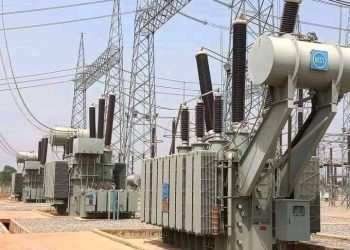
Attempts to resolve the energy sector’s persistent crisis in the past have failed to revive the sector. The recent presidential intervention is a further step towards solving the problem; however, it is unclear how far intervention will go, judging by the rot in the sector; SUNNY IDACHABA writes.
From name change to privatization
If there is one sector in Nigeria that has been defying any government intervention for several years now, it is the energy sector.
It evolved through several names such as Electricity Corporation of Nigeria (ECN) shortly before independence, later transformed into National Electric Power Authority (NEPA), a name that is synonymous with underperformance and has remained in the mouths of children and even the unborn. The last name change was Power Holding Company of Nigeria (PHCN).
In 2013, the federal government hived off the former PHCN into various units through the separation of generation and distribution companies through the privatization process. So today there are Abuja Electricity Distribution Company (AEDC), Ikeja Electricity Distribution Company (IEDC), Jos Electricity Distribution Company (JEDC), etc.
All of these, except Generation and Transmission, are partially still under government control. Despite all this, the country’s energy supply remained epileptic and, in many cases, terribly unavailable.
Furthermore, painfully, at the turn of every election cycle, politicians loudly promise to revive the sector if voted in; however, not long after, everything would remain as usual. Investigations reveal that most of the problems are obsolete equipment, lack of maintenance, insufficient gas supply to heating systems or debts to gas suppliers.
Since February 2026, most of the country is experiencing the worst form of darkness, due to insufficient electricity supply. The report indicates that the problem was associated with debt owed to gas suppliers and load shedding by the Nigerian Independent System Operator (NISO) due to some differences with the government.
As a result, between February and March 2026, power generation fell to less than 4,000 megawatts, well below installed capacity of more than 13,000 megawatts and estimated demand of more than 20,000 megawatts, even as power supply currently hovers between 4,000 and 4,500 megawatts. This is all in addition to the intermittent collapse of the national grid that had become so embarrassing.
Presidential speech
In a bold move to tame the sector crisis, President Bola Ahmed Tinubu recently approved a ₦3.3 trillion payment plan for gradual clearing of long-standing debts owed to operators. The goal is to restore electricity reliability across the country.
According to a statement by the President’s Special Adviser on Information and Strategy, Bayo Onanuga, the debt resolution is part of the President’s Energy Sector Financial Reform Program and also follows a comprehensive review of obligations accumulated between February 2015 and March 2025.
“The ₦3.3 trillion verified represents a full and final settlement designed to bring transparency and closure to the financial liabilities that have plagued the industry for over a decade.
“Implementation is already underway, with 15 power generation companies having signed settlement agreements worth ₦2.3 trillion. The federal government has so far raised ₦501 billion to finance the program, of which ₦223 billion has been disbursed, while additional payments are ongoing.
“The intervention is expected to stabilize electricity production by ensuring that power plants and gas suppliers receive due payments, thus enabling improved operational capacity across the value chain,” he said.
Further explaining the significance of this intervention, Special Adviser to the President on Energy, Olu Arowolo-Verheijen, said the program goes beyond financial reconciliation.
“This program isn’t just about paying off pre-existing debts; it’s about restoring confidence in the energy sector, ensuring that gas suppliers are paid, that power plants can continue to operate and that the system begins to operate more reliably.”
For her, this is the first big and courageous attempt to get the sector out of underperformance. He said the initiative aligns with other reforms such as improved metering and service-based tariffs that tie electricity payments to the quality of supply.
He said: “The Government is also prioritizing the supply of energy to businesses, industries and small businesses because reliable electricity is vital to creating jobs, supporting livelihoods and growing the economy.”
Prior to the liquidation of this debt, the immediate past Minister of Energy, Adebayo Adelabu, had given this indication after a meeting he had with the leadership of GenCos in Abuja. According to him, the government recognized the critical nature of the debt and would prioritize its liquidation.
“We recognize the urgency of the matter. The government is committed to resolving this debt to stabilize the sector and prevent further crises,” he said.
Opportunities for reform and investment
Meanwhile, to resolve the persistent crisis in the energy sector, experts are calling on local governments to be fully involved in the supply chain to completely shift the burden onto the federal government, especially as it has been removed from the exclusive list.
An energy expert, Nick Agule, said that constitutionally there was nothing to stop local councils from taking power. He then described any move by the federal government to decentralize the electricity market as a significant development rooted in recent constitutional reforms that would open the sector to broader participation.
Agule said the Electricity Law signed by former President Muhammadu Buhari to decentralize the control market was a turning point in the sector. “Electricity has been taken from the Constitution’s exclusive list and placed on the concurrent list. We are providing 5,000 megawatts for more than 200 million people. Where on earth have you seen such magic on this scale?” he asked.
He said the change fundamentally changed the structure of the electricity market by allowing, not only the federal government but also states, local government and private investors to participate in generation, transmission and distribution.
The first calls for the shift
It could be recalled that as early as 2018, a professor of energy law, Yinka Omorogbe, proposed that energy control should be in the concurrent legislative list rather than the exclusive list to ensure efficient energy supply in the country.
This former Attorney General of Edo State argued that the idea of giving full control of energy to the Federal Government was not in the best interest of the nation.
“Should energy be in the exclusive list or in the concurrent list? Definitely in the concurrent list. Why is it in the exclusive list in the first place? Pure control! It’s not there because it’s in anyone’s interest, but the center has always wanted to exercise as much control as possible. Ever since we moved from regionalism and moved to the center, it’s been all about control.
“Yes, we would be much better off because the truth is, at the end of the day, the ones who would really feel the brunt of this lack of energy are the people at the local government level. Local governments are the ones wearing the shoes, so I clearly believe it should be on the concurrent list.”
Solar to the rescue
As the energy crisis continues unabated, attention is shifting towards renewable energy, which many believe is cheap and easily available if well exploited. Renewable energy, according to experts, includes solar energy, wind energy, biomass and other energy sources derived directly or indirectly from the effect of solar energy.
In this sense, solar energy has become a ready answer to many of the unanswered questions in the energy sector. Emmanuel Agbo, an energy expert, writing on the benefits of renewable energy, said: “They are sustainable, can be replenished and for the most part have no harmful side effects, except in the process of exploitation, which is the result of human activities.
“The development of renewable energy projects represents a huge opportunity from a technological and environmental perspective. From a strategic and financial perspective, this development will be beneficial to a country or region. This can increase labor employment and production.”
In many homes today the focus is shifting towards solar energy with all the panels adorning the homes of those who can afford it. The situation has become so bad that even the seat of power in Abuja, the Presidential Villa, has been removed from the national grid in favor of solar energy.
For his part, Abubakar Opeyemi, an energy writer, said: “While solar capacity is still relatively small compared to the national energy deficit, its rate of adoption suggests a change in direction rather than scale.
“The idea of solar, therefore, is not about dominance in production, but about influence in the trajectory. Increasingly, solar solutions are shaping the way individuals and businesses think about energy independence, especially in response to grid limitations and fuel costs.”