JamzNG Latest News, Gist, Entertainment in Nigeria
New concerns have emerged regarding the conduct of the 2027 elections after the Independent National Electoral Commission (INEC) warned that worsening insecurity across the country could threaten the credibility and smooth conduct of the elections.
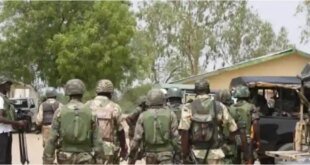
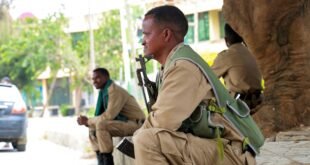
But the warning has sparked sharp reactions from opposition parties and political groups, many of whom strongly oppose the proposed deployment of military personnel for election duties, and insist that election security must remain the responsibility of civilian authorities.
The debate comes amid increased political activity, early coalition talks, and growing concerns over violence and instability in several regions of the country ahead of the next election cycle.
Speaking during a visit to Inspector General of Police Tunji Disu in Abuja, INEC Chairman Joash Amupitan warned that insecurity remains a major threat to democratic stability and electoral integrity.
He said, “In Nigeria, our electoral system has faced many challenges over the years, ranging from malpractices to threats of violence and vote trading that undermine the confidence of voters.
“These challenges not only affect the outcome of our elections, but also pose significant risks to our national security. Therefore, it is critical that we address these issues with the utmost seriousness and determination. In this regard, I would like to emphasize the importance of proactive security measures.”
Amupitan stressed that the scale of violence and instability in some parts of the country requires urgent planning and coordinated intervention ahead of the elections.
“The scale of insecurity in various regions in Nigeria poses a threat to the holding of fair elections. We must conduct a thorough security risk analysis in the run-up to the elections, and this will enable us to identify potential hotspots and implement appropriate strategies to mitigate risks, thereby protecting voters, election officials and the integrity of the electoral process,” he said.
The INEC chairman noted that preparations have become even more important with the presidential election set for January 16, 2027, and the governorship and state assembly elections scheduled for February 6.
He also identified the ongoing party congress, primaries under the 2026 Election Law, and gubernatorial elections in Ekiti and Osun states as developments that require enhanced security coordination.
Amupitan also urged security agencies to pay attention to internally displaced persons and citizens with disabilities, and stressed that they should not be denied participation in the electoral process.
“I would also like to draw attention to the several refugee camps scattered across Nigeria. Let me say that they too have the right to vote, and they should not be deprived of that right.
“As an electoral institution, we are making every effort to ensure that all those in refugee camps are given a conducive environment to exercise their right to vote, and also people with disabilities. Therefore, we appreciate all people, categories of people, people in refugee camps, as well as people with disabilities for the IG to receive special attention and attention,” he said.
In response, the police chief assured Nigerians that his force had begun intelligence gathering and national threat assessment ahead of the elections.
Disu said the police would rely on preventive policing and collaboration between agencies to secure the election and protect election personnel and facilities.
“I assure you that the police will enforce the election law firmly and professionally. I repeat, we will ensure that we enforce the election law firmly and we will do it professionally,” he said.
He also warned that election violators would face prosecution.
READ ALSO: Police uncover ₦713.9 million bank fraud syndicate, arrest suspect
“I want to emphasize that individuals involved in ballot confiscation, vote buying, voter intimidation, destruction of election materials, violent destruction of polling places, or attacks on election officials will be arrested and prosecuted to the fullest extent of the law.”
Regarding refugees and vulnerable groups, the Inspector General added, “You mentioned the issue of people who are in refugee camps. We have noted that they are in our plans. People with disabilities have been brought into awareness, and special plans have been made for them.”
Despite the assurances, opposition figures expressed concern over increasing calls for the military to be involved in election security, arguing that such a deployment could undermine public trust and increase tensions.
The National Coordinator of the Obedient Movement, Yunusa Tanko, emphasized that elections are a civil activity that is best carried out by the police and other non-military institutions.
He said, “The police are not well equipped. This is an internal matter, and the police should be well equipped to tackle internal insecurity, while the army will guard the borders and ensure people do not infiltrate the country.
“But the problem is, how well do we equip our security forces to be able to deal with the insecurity that exists in this country? Remember, once again, we experienced a similar situation in the (Goodluck) Jonathan era when they raised the issue of insecurity, an action that led the then National Security Advisor, Sambo Dasuki, to force an extension of the elections for certain reasons.”
Tanko warned against any attempt to use insecurity as a justification to disrupt the election process.
“It is very important for us to note that the current government does not try to use insecurity as an issue to ensure this election does not take place. We know the government is very worried that Peter Obi is likely to contest the election. So, we must be very careful of the possible landmines and traps they may lay for the opposition,” he added.
Also reacting was the National Publicity Secretary of the Labor Party, Ken Asogwa, who described the military deployment for the election as inappropriate.
“It’s so unfortunate the situation we’re in, that we might think about inviting the army to guard civil exercises like our elections. These are exercises that, in other jurisdictions like Ghana, I don’t even want to talk about the Western world, are conducted on weekdays where people are going to work and traveling wherever they go,” he said.
He continued, “What happened to civil defense trained to handle tasks like election activities? We shouldn’t even direct the army at all. Soldiers are trained to fight and protect the territorial integrity of a country. They are not trained to guard polling stations or pacify the public.
“We were just out to elect our leaders. It’s a shame that the politicians took us there. Again, the police are also there to deal with this kind of community involvement.”
The People’s Democratic Party’s Interim National Working Committee, led by Tanimu Turaki, also gave its opinion, arguing that the biggest threat to credible elections lies with INEC itself.
Speaking through the committee’s National Publicity Secretary, Ini Ememobong, the group stated, “The INEC Chairman may have a point. But insincerity and partisanship within INEC poses a greater threat to the election than insecurity. He must focus on matters that are his direct responsibility, especially ensuring impartiality, transparency and credibility, as well as enabling the President to address security issues.
“While insecurity may disrupt elections, attention must be directed towards strengthening INEC’s neutrality as an electoral umpire. The Commission’s priority must be to build public trust, demonstrate integrity, and address concerns regarding fairness in the electoral process.”
The PDP faction also opposes the use of troops during elections.
“Calls to deploy military personnel ahead of elections should not be considered, given the sensitive role of security in the electoral environment and past experience of it sometimes being misused or contributing to tensions. Other security agencies should be allowed to handle election-related issues, not the army.
“Ultimately, INEC must concentrate on holding elections that are credible and based on trust, fairness and institutional integrity,” the statement added.
Likewise, the National Publicity Secretary of the New Nigerian Peoples Party, Ladipo Johnson, urged the Federal Government to urgently address insecurity before the election season intensifies.
“If this government is serious about holding elections in January 2027, then insecurity must be addressed properly. How many more months? Eight months, right? So we have enough time to have a positive effect on the security situation in this country,” he said.
But Johnson questioned the government’s capacity to resolve the crisis given its past failures.
“The eight months they have is more than enough time to start fixing the lack of security in this country, especially in the areas that we know about. But I don’t know if they have the competence to do it, because they have been trying for several years to address this problem but have failed.
“Knowing what we know and the past experience that we all have, I would not push for a situation where these governments would be given permission to deploy military personnel to the polls.”